

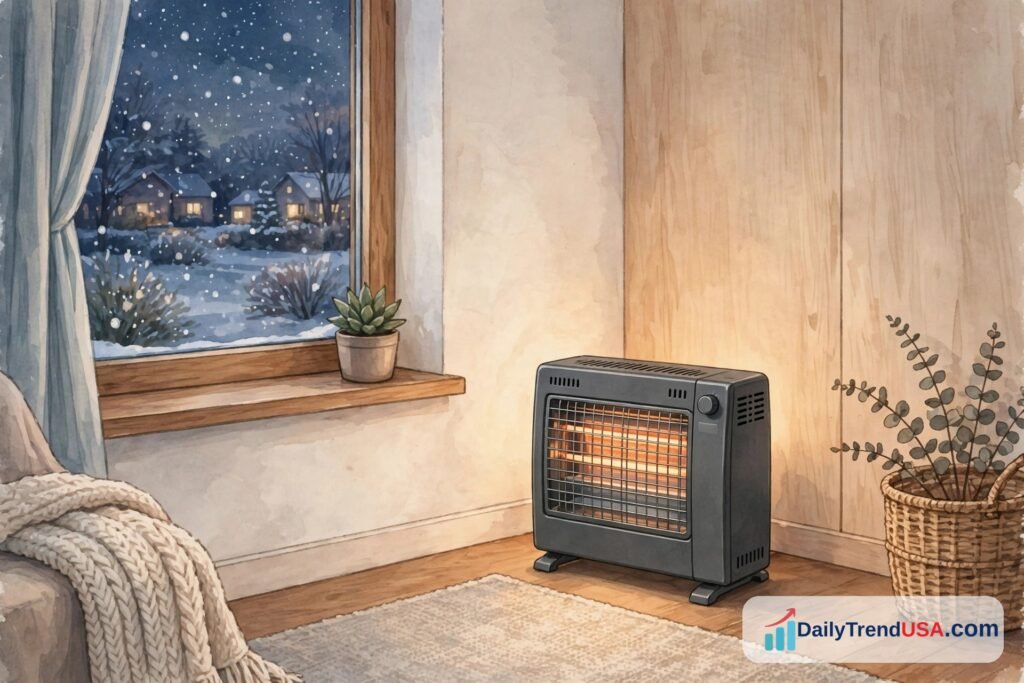
A space heater can take the chill out of one cold room, but it is also one of the riskiest appliances in a home. It makes heat on purpose, it sits close to furniture and bedding, and it is easy to forget about once a room feels warm. Most space heater fires start the same way: something flammable gets too close, the heater is left running alone, or it is plugged in the wrong way. The good news is that every one of those risks is easy to avoid, and none of the fixes cost much. This guide covers the rules that matter most, so you can stay warm without putting your home at risk.
The 3-foot rule comes first
Key rule: keep at least 3 feet of clear space around your space heater on every side. That means no curtains, bedding, blankets, towels, papers, boxes, or furniture within that zone. It also means keeping the heater away from anything that can catch fire easily, even if it looks fine at first glance. Heat builds up over time, and a curtain that only brushes a heater for a minute can be a problem if it stays there for hours.
Check above it, behind it, and on the floor beside it. Move anything that could fall onto it, such as a throw blanket draped over a chair arm or a pile of laundry waiting to be folded. Pets and children can also knock things toward a heater without meaning to, so the clear zone matters even more in a busy household.
Plug it straight into the wall
Key rule: plug a space heater directly into a wall outlet, and never into an extension cord or a power strip. Space heaters draw a lot of power, and most extension cords and power strips are not made to handle that load for hours at a time. A cord that feels warm, looks melted, or smells odd is a warning sign, not something to ignore.
Use one heater on one outlet. Do not plug a second heater, or another heavy appliance, into the same outlet. If the outlet feels hot, if the plug does not fit snugly, or if a breaker keeps tripping when the heater runs, stop using that outlet and have it checked. A loose or damaged outlet can overheat even when the heater itself seems fine.
Check the heater’s own cord before each winter season, and give it a quick look during the season too. If the cord is frayed, cracked, cut, or taped up from an old repair, do not use the heater. A damaged cord is not a small problem, and it is not something to fix with tape. Replace the heater or have it repaired by someone qualified to do that work.
Never leave it running alone
Key rule: turn a space heater off when you leave the room, and always turn it off before you go to sleep. This is the rule people break most often, because it feels harmless to leave a heater running in an empty room or overnight. But an empty room is exactly where a problem can grow unnoticed. If something falls onto the heater, or the heater tips over, no one is there to catch it in the first minutes.
Make turning the heater off part of your routine, like locking the door or switching off the lights. If you leave the house, the heater goes off. If you go to bed, the heater goes off.
Pick a heater with safety features
When you buy a space heater, look for safety features built into the design, not just a low price or a nice look. Two features matter most: tip-over protection, which shuts the heater off if it falls over, and overheat protection, which shuts it off if it gets too hot inside. A heater that keeps running after it tips onto carpet or bedding is far more dangerous than one that stops on its own.
Also look for a safety certification mark from a recognized testing laboratory on the heater and its packaging. That mark means the heater was tested against safety standards. It does not make a heater safe on its own — you still need to follow the rules in this guide — but it is a sensible starting point when you are choosing between models.
Put it on a flat, hard floor
Key rule: place a space heater on a flat, hard, level surface, never on a bed, a rug with a thick pile, a table, or a shelf. A heater sitting on soft or uneven ground is more likely to tip over, and heat can build up underneath it. A hard floor lets air move around the heater the way it was designed to work.
Keep the heater out of walkways and doorways where someone could trip over it or knock it over in the dark.
Do not use a space heater in a wet area. Never run a space heater in a bathroom, near a sink, or anywhere it could get splashed or fall into water. Water and electric heat are a dangerous mix, and a bathroom is not a safe place for a portable heater. If a bathroom feels cold, warm the rest of the home instead, or talk to a professional about a heating option made for that space.
Keep children and pets in mind
Children and pets do not always understand that a heater is hot, and they can get hurt just by touching it. Teach children that a space heater is not a toy and not something to sit on, lean against, or cover with a blanket. If young children are in the room, keep the heater where they cannot easily reach it, and keep the clear zone around it free of toys and play items.
Pets can knock a heater over by brushing past it, chasing a toy, or curling up against it for warmth. If a pet likes to sleep near heat, give it a safe spot away from the heater, and check that the heater’s clear zone stays clear after the pet has been in the room.
Check your smoke and carbon monoxide alarms
A space heater makes the alarms in your home even more important. Test your smoke alarms at least once a month, and make sure you have working carbon monoxide alarms if your home uses gas, oil, wood, or any fuel-burning heat. Press the test button, listen for the sound, and replace batteries or the alarm itself when it stops working the way it should.
If you are not sure where your alarms are, walk through your home and find them now, before you need them. Smoke alarms belong on every level of the home and near sleeping areas. If an alarm is old, dusty, or missing, fix that before the coldest nights arrive.
An alarm cannot prevent a fire, but it can give you the early warning that turns a scary moment into a safe exit. Never remove an alarm battery to stop a false alarm and then forget to put it back. If an alarm keeps going off for no clear reason, find out why, and replace it if it is faulty.
What to do if something seems wrong
If a heater smells like burning, makes a strange noise, sparks, smokes, or feels far hotter than usual, turn it off right away and unplug it. Do not try to keep using it while you figure out what is wrong. Let it cool down completely, and do not plug it back in until you know the cause. If the cord, plug, or outlet shows signs of heat damage, do not use that heater or outlet again until a qualified person has checked it.
If a fire starts, get everyone out of the home first and call emergency services from outside. Do not go back inside for belongings, and do not try to fight a fire that has spread beyond the heater itself. Close doors behind you as you leave if you can do so safely, because a closed door can slow smoke and fire.
If you smell gas, or a carbon monoxide alarm sounds, leave the home and call emergency services from outside. Do not turn lights or appliances on or off while you are still inside, and do not try to find the source of the smell yourself.
A quick safety checklist
Before winter settles in, run through this list once, and then keep the habits going all season. Keep 3 feet clear around the heater. Plug it straight into the wall. Turn it off when you leave the room and before bed. Put it on a flat, hard floor, away from water. Check the cord, and use a heater with tip-over and overheat protection. Test your smoke and carbon monoxide alarms, and make sure everyone in the home knows how to get out safely if an alarm sounds.
For a wider winter plan, see our guides on checking smoke alarms when the clocks fall back, preparing your home for freezing weather and what to do during a power outage. A warm home matters, but a safe home matters more, and with a few steady habits you can have both all winter long.