

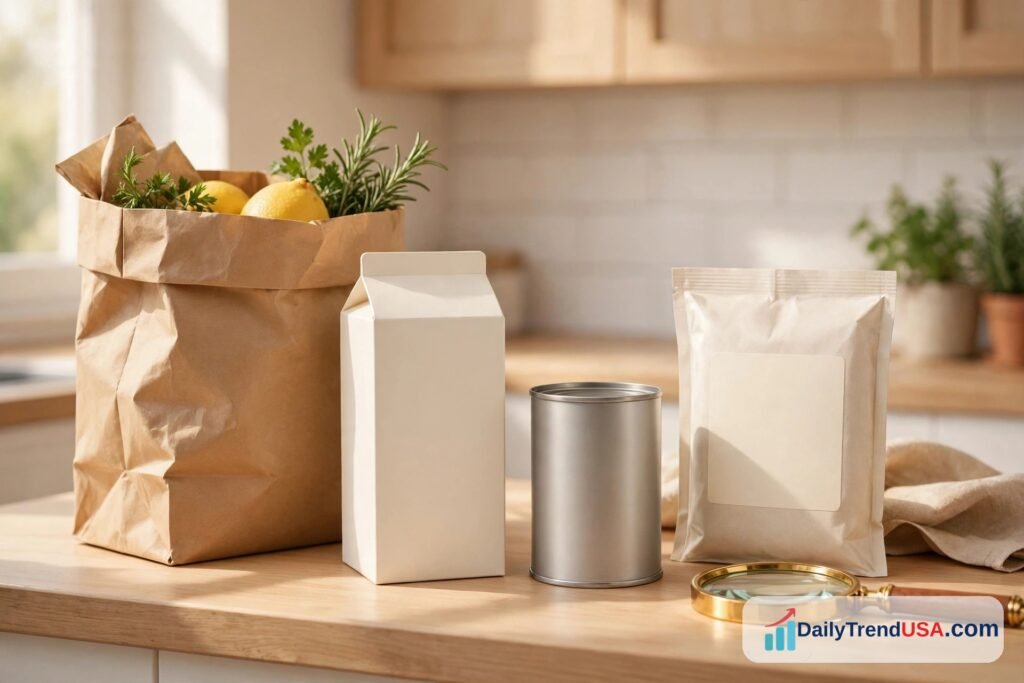
Who Issues a Food Recall, and Why
A food recall happens when a company or a government agency removes a food product from sale because it may be unsafe. The most common reasons are harmful bacteria, an undeclared allergen such as peanuts or shellfish, foreign objects such as metal or plastic fragments, or mislabeled ingredients.
Two agencies handle most food recalls in the United States, and knowing which one matters because their lists live in different places. The Food and Drug Administration (FDA) covers most packaged foods, while the U.S. Department of Agriculture’s Food Safety and Inspection Service (FSIS) covers meat, poultry and egg products. Non-food items, such as appliances and toys, fall to the Consumer Product Safety Commission instead.
One fact surprises many people: nearly all U.S. food recalls are voluntary, meaning the company initiates them. The FDA gained mandatory recall authority only in 2011 and can use it only after a company refuses to act; FSIS has no mandatory recall authority at all. “Voluntary” does not mean optional for shoppers — it describes who started the process, not how seriously to take it.
Sometimes FSIS issues a public health alert instead of a recall. That usually happens when a product can no longer legally be recalled, for example because it is no longer for sale, but could still seriously affect people who already bought it and may still have it at home. Treat an alert with the same caution as a recall.
The 5-Minute Kitchen Check
When you hear about a recall, do not panic — and do not throw away everything with that brand name. A recall almost never covers every package of a product. It usually covers specific batches, so the recall notice itself is your checklist.
Start at FoodSafety.gov’s recall page, which pulls together FDA and USDA alerts in one place so you do not have to check two separate sites. For FDA-regulated products you can also check the FDA’s Enforcement Reports and its Recalls, Market Withdrawals and Safety Alerts pages; for meat, poultry and egg products, check the FSIS recalls page directly.
Then compare your package against every identifier the notice lists. Depending on the recall, that can include: product name and brand, including the exact flavor or variety; package size; the UPC, the number under the barcode; dates, such as a best-by or use-by date range; and the lot code or batch number, usually printed or stamped near the date. For meat, poultry and processed egg products, also check the establishment number, shown as an “EST.” number inside the USDA mark of inspection. For eggs specifically, check the plant code and Julian date printed on the carton.
If your package matches all the identifiers in the notice, treat it as recalled. If it does not match completely — different size, different lot, different date — it is not part of that recall. And if the label is smudged or missing and you cannot tell, err on the side of caution and treat it as recalled.
One more check people forget: distribution. Some recalls are limited to certain stores or states, so also check where the product was sold. Your store of purchase matters as much as the brand name.
What the Recall Class Actually Means
Recalls are classified by risk, and the class tells you how urgently to act. Class I is the most serious: a reasonable probability the product causes serious harm or death. Act immediately. Class II means the product may cause temporary or reversible harm. Class III means the product is unlikely to cause harm — often a labeling technicality that still violates food safety law.
Two more terms are worth knowing. A “market withdrawal” is not a recall; it covers minor issues, such as a product pulled for quality reasons without a safety risk. And a recall notice that names a product you already finished does not mean you will get sick — it means you should watch for symptoms and know what to mention to a doctor, as explained below.
The class also explains why some recalls dominate the news while others barely register. A Class I recall of a widely sold product affects millions of packages; a Class III labeling recall may affect a single batch. Both deserve the same checking routine — only the urgency differs.
What to Do If Your Food Matches
If your package matches a recall notice, follow these steps in order. First, set it aside right away so nobody eats it by mistake. Do not open it, do not taste it, and do not try to “cook the problem away” unless the notice specifically says cooking makes it safe.
Second, follow the instructions in the recall notice. Some recalls offer a refund or replacement, and the notice will tell you whether to return the product to the store or contact the company. If you are not sure, call your retailer or the number listed in the notice. Some companies ask for a photograph of the product and its identifying code before issuing a refund.
Third, if you are told to discard it, seal it in a bag and throw it out. Do not donate it, share it, or feed it to pets. Giving recalled food to another person or a pet does not make it safe. Wash your hands with warm water and soap after handling it.
Fourth, wash and sanitize any surfaces or utensils that may have contacted the food. Check shelves, containers, cutting boards and fridge drawers. This matters most for recalls involving bacteria such as listeria or salmonella, which can linger on surfaces after the food itself is gone.
Finally, watch for symptoms if someone already ate the product. If someone in your home feels unwell after eating a recalled food, call your doctor and mention the recall by name. That detail helps the doctor connect symptoms to a known cause much faster than a vague description of “something I ate.”
How to Hear About Recalls First
The easiest way to stay ahead of recalls is to let the news come to you. Both the FDA and the USDA offer free email recall notifications, and the FDA lets you choose all recalls, food-only recalls, or individual recall events on a daily or weekly basis. Signing up takes a minute and removes the need to check recall pages yourself.
Grocery stores may also notify customers who purchased a recalled product, if they can identify buyers through purchase records such as frequent shopper cards. That system is helpful but incomplete — it only works if you used a card and the store has your contact details — so it should never replace your own checking habit.
A simple routine covers most households: check FoodSafety.gov when a recall makes the news, keep the packaging until the food is finished so the lot code stays available, and photograph the label of any product you decant into another container. Throwing away packaging before documenting the code is one of the most common recall mistakes, and it turns a 5-minute check into a guessing game.
Recalls can feel alarming, but the system behind them is a sign that food safety checks are working — problems are found, named and pulled from sale. The same careful approach applies to other safety notices, such as the FDA warning on Haifa smoked fish and the recall of GLP-1 injections. In each case the useful question is the same: does this notice match something in my home, and if so, what does it ask me to do?
What we know: the checking steps, recall classes and disposal guidance above come from FDA, FSIS and FoodSafety.gov process guidance. What changes with every recall: the specific products, lots, dates and instructions — which is why the official notice for that recall, not a news summary or a social media post, is always the final word.



2 Comments