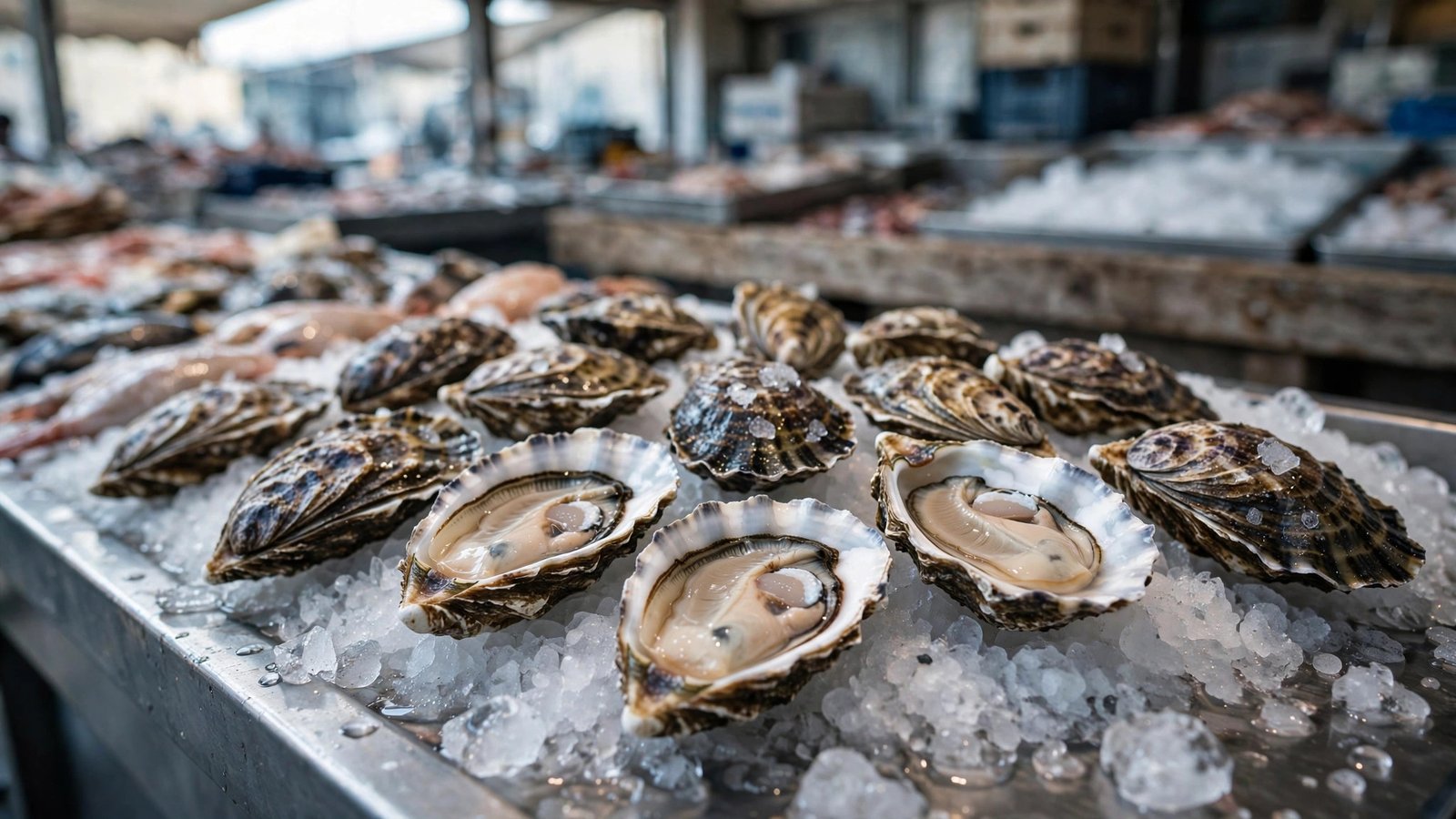
Salmonella Outbreak Linked to Recalled Virginia Oysters: Virginia Counts 55 Sick, CDC Tracks 27 in a Subgroup
Federal and state health officials are investigating a multistate Salmonella outbreak linked to raw oysters from Virginia’s Little Wicomico River. The Virginia Department of Health counts 55 people sickened across 19 states, while the Centers for Disease Control and Prevention (CDC) is tracking 27 illnesses in 12 states that form a closely related genomic subgroup within the broader investigation. Five people have been hospitalized, and no deaths have been reported.
Little Wicomico Oyster Company voluntarily recalled its whole, in-shell oysters on October 9, 2026, and has stopped harvesting from the affected area, according to the Food and Drug Administration (FDA).
Which oysters are recalled?
- Product: Whole, in-shell (shellstock) raw oysters
- Company: Little Wicomico Oyster Company
- Certification number (on the shellstock tag): VA-1421-SP
- Harvest areas: Little Wicomico River and Little Wicomico River Lower, Virginia
- Harvest dates: September 18 – October 8, 2026
- Recall date: October 9, 2026 (voluntary)
If you bought raw oysters recently, check the shellstock tag that retailers and restaurants keep with the product. If the tag shows certification VA-1421-SP and a harvest date in the window above, the oysters are part of this recall. In Georgia, the state Department of Agriculture says Publix sold the oysters as “James River Oysters” between September 27 and October 14, 2026 — five days past the recall announcement.
Oysters harvested from other Virginia growing areas are not part of this recall, officials emphasize.
Why are there two different case counts?
The CDC’s October 19 update focuses on a genomic subgroup — 27 patients in 12 states whose infections are closely related by laboratory testing — with illness onsets from late May to September 14, 2026. Virginia health officials, counting the broader Salmonella Telelkebir investigation, report 55 patients in 19 states, with the most recent illness beginning October 6. Because it can take three to four weeks for a sample to be tested, sequenced, and matched to an outbreak, officials say confirmed counts typically rise as an investigation continues, and the true number of illnesses is likely higher than either count.
Of the CDC-tracked patients, Pennsylvania has reported the most illnesses (eight), followed by New York (four) and Virginia (three), and most patients interviewed reported eating raw oysters in the days before becoming ill.
Where were the oysters sold?
According to the FDA, the recalled oysters were distributed to restaurants and retailers in 15 states and Washington, D.C.: California, Colorado, Connecticut, Florida, Georgia, Illinois, Maryland, Missouri, Nevada, New Jersey, New York, North Carolina, Pennsylvania, Texas, and Virginia — and they may have been distributed further, which is why the tag check matters even outside this list. Virginia’s distribution list is similar but does not name California.
How investigators linked the outbreak to these oysters
The connection was built from patient interviews, purchase records, and laboratory testing. Of the 13 sick people interviewed by public health officials, 10 — 77 percent — reported eating raw oysters in the days before they became ill, far above the 1.6 percent background rate the CDC’s FoodNet survey finds in the general population. For seven of those patients, investigators could trace the oysters back through restaurant and distributor records, and oysters harvested by Little Wicomico Oyster Company from the Little Wicomico River were the only source all seven had in common. Pennsylvania officials also collected a sample of the company’s oysters at a distributor that supplied restaurants where patients had eaten; the sample tested positive for Salmonella, and whole genome sequencing is still pending to confirm whether it matches the outbreak strain. Virginia health officials collected 400 oysters from the river on October 13 for testing as part of the same investigation.
What officials have done
- The Virginia Department of Health closed the Little Wicomico River harvest area effective October 9, 2026; the closure is initially expected to run about 30 days (through November 7), and reopening depends on oyster testing coming back negative.
- The company notified its distributors and customers and is cooperating with investigators, according to the FDA.
- The investigation began after Pennsylvania officials established an epidemiological link between illnesses and oysters from the affected harvest areas.
What should you do?
- Consumers: Do not eat oysters matching the tag details above. Throw them away or return them. The FDA cautions that contaminated food can look, smell, and taste normal.
- Restaurants and retailers: Do not sell or serve the recalled oysters. Discard them or contact your distributor, per FDA guidance.
- If you feel ill: Salmonella symptoms — diarrhea, fever, and stomach cramps — usually begin 6 hours to 6 days after exposure, and most people recover within 4 to 7 days without treatment. Seek medical care for severe symptoms and tell your provider you ate raw oysters.
If the recalled oysters touched your kitchen, wash every item and surface they may have contacted — knives, cutting boards, platters, and coolers — with hot, soapy water, or run them through a dishwasher. If you ate oysters at a restaurant and are unsure where they came from, you can ask the restaurant to check the shellstock tag: under the FDA Food Code, businesses must keep those tags for 90 days, so tracing is still possible weeks after a meal.
Call a doctor promptly if you develop diarrhea with a fever above 102°F, bloody diarrhea, diarrhea lasting more than three days, signs of dehydration, or vomiting that prevents you from keeping liquids down. Children under 5, adults 65 and older, and people with weakened immune systems face the highest risk of severe illness.
How to lower your risk with raw oysters
This outbreak is tied to one company and one harvest window, and officials stress that oysters from Virginia’s other growing areas are not part of the recall. Still, raw shellfish always carries some risk: thorough cooking kills Salmonella, while hot sauce and lemon juice do not. If you are in a higher-risk group, health officials recommend choosing cooked oysters instead — steamed or boiled until the shells open and the meat is firm. When you do order raw oysters, asking where they were harvested is a reasonable habit, and during an active recall it is the fastest way to protect yourself.
What we know / what we don’t know
Known: the recall covers oysters from one company, two harvest areas, and harvest dates September 18–October 8, 2026; the certification number is VA-1421-SP; Virginia counts 55 illnesses and the CDC counts 27 in a genomic subgroup; five people have been hospitalized and no deaths have been reported.
Not yet known: the original source of contamination in the harvest area, and the outbreak’s final size. This article will be updated on the same URL if officials release material new information.
Sources: FDA Safety Alert — Salmonella in oysters from the Little Wicomico River, Virginia; CDC — Salmonella outbreak linked to oysters, October 2026; Virginia Department of Health figures as reported by Food Safety News, October 22, 2026, and Food Poison Journal, October 2026.
One Comment