


Standfirst: When the heat comes on and the windows stay shut, the air inside a home changes. Indoor air quality in winter drops because the house stops exchanging air with the outside, and everything released indoors, from cooking fumes to cleaning sprays, stays in the rooms longer. The U.S. Environmental Protection Agency says the fix starts with two steps: cut the sources of pollution and bring in fresh air. A third step, holding indoor humidity between 30 and 50 percent, keeps the air comfortable without inviting mold.
Key facts
| Fact | Detail |
|---|---|
| Problem | Sealed winter homes exchange little air with the outside, so indoor pollutants build up |
| EPA’s first step | Reduce or remove the sources of indoor pollution |
| EPA’s second step | Ventilate with clean outdoor air |
| Humidity target | Below 60 percent, ideally between 30 and 50 percent |
| Measure it | A small, inexpensive hygrometer from a hardware store |
| Mold rule | Dry wet materials within 24 to 48 hours of a leak or spill |
| Alarms | Check smoke and carbon monoxide alarms when the heating season starts |
| Radon | Test for it; the EPA’s radon guidance covers test kits and next steps |
Why winter air is different
In summer, open windows and doors move air through a house all day. In winter, that free ventilation disappears. The EPA explains that when little outdoor air gets in through infiltration, natural ventilation, or mechanical ventilation, the air exchange rate is low and pollutant levels can increase. The house is warmer and drier, but the air inside is more crowded with whatever the home itself produces.
The EPA lists the main indoor sources plainly: fuel-burning appliances, tobacco products, building materials, household cleaning products, personal care products, and excess moisture. Heating systems join the list in winter. A gas stove is a primary indoor source of nitrogen dioxide, and the EPA names unvented combustion appliances such as gas stoves as a concern. Wood smoke, from a fireplace or wood stove, is a mix of gases and fine particles, including benzene, formaldehyde, acrolein, and polycyclic aromatic hydrocarbons, according to the EPA’s Burn Wise program.
None of this means a home is unsafe. It means the air inside needs more attention in winter than it does in summer, and the fixes are mostly habits, not purchases.
Ventilate on purpose
The EPA’s advice on ventilation is simple: use the fans the house already has. Run the kitchen exhaust fan when you cook, and make sure it vents to the outside, not into the attic or a wall cavity. The EPA recommends exhaust fans vented to the outdoors over gas stoves. Run the bathroom fan during and after a shower, or open the window, as the EPA’s mold guide suggests. Check that the dryer vents outside too, not into the house or attic.
On milder winter days, open a window for a short while if the outdoor air is clean. A brief airing does more than a window left open a crack all day, which mostly lets in cold without moving much air. The goal is not to freeze the house. It is to replace stale indoor air with fresh air for a few minutes, then close up again.
Homes with a mechanical ventilation system, such as a heat recovery ventilator, should keep it running through the heating season. The system brings in fresh air while keeping most of the heat, which is the point of the equipment.
Hold humidity between 30 and 50 percent
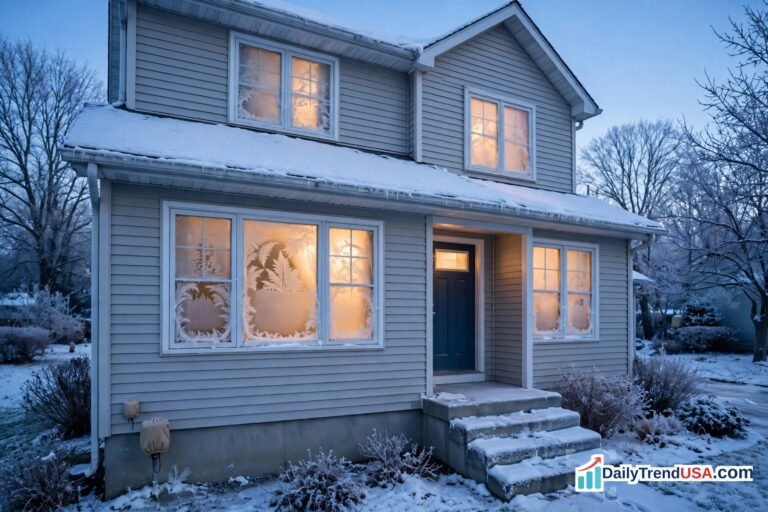
Heated winter air often feels dry, because cold outdoor air holds little moisture, and heating it drops its relative humidity further. Dry air dries out skin and airways and can crack wooden floors and trim. But too much moisture is worse. The EPA’s mold guide says to keep indoor relative humidity below 60 percent, ideally between 30 and 50 percent.
A cheap hygrometer tells you where the house stands. Check the living areas and the basement separately, because they often read differently. If the air is below 30 percent, a humidifier is the tool. An air purifier does not add moisture, so it will not fix dry air. If the reading is above 50 percent and you see condensation or frost on the inside of windows, the humidity is too high for that outdoor temperature, and the EPA says to act quickly to dry the wet surface and reduce the source of the moisture.
Condensation is the warning sign to watch. Fog or droplets on the inside of a window mean moisture is collecting on a cold surface, and mold can follow. The EPA’s mold guidance is built on one idea: control the moisture and you control the mold. Materials still wet 24 to 48 hours after a leak or spill are likely to grow mold, so dry them fast.
Change the filter and cut the sources
The most effective first step is unglamorous: change the furnace filter. A dirty filter strains the heating system and moves less air. Check it monthly through the heating season, and replace it when it looks dirty. A common rule of thumb is MERV 8 for general use, MERV 11 if you have pets or mild allergies, and MERV 13 for asthma or severe allergies, but check the furnace manual first, since not every system can handle a dense filter.
Cutting sources costs nothing. Burn less wood, and never use unvented stoves, fireplaces, or space heaters indoors; the EPA advises against them. Choose cleaning products with less fragrance, and open a window or run the fan when you use them. Vacuum weekly with a HEPA-equipped vacuum, which traps fine particles instead of blowing them back into the room. Keep the house dusted, and wash bedding that collects dust mites.
Two checks belong on the same list. Test for radon, a colorless gas that comes from the ground and can build up indoors; the EPA’s radon guidance covers test kits and what to do with the result. And check the smoke and carbon monoxide alarms when the heating season starts, since fuel-burning heat is running for months and a working alarm is the only warning if something goes wrong.
What to do this weekend
A short check covers most of it. Walk the house with a hygrometer and note the reading in the living room and the basement. Turn on the kitchen and bathroom fans and confirm they vent outside. Change the furnace filter, and write the date on its edge so you know when it went in. Look at every window for condensation, and dry any wet surface you find. Test the smoke and carbon monoxide alarms, and test for radon if the house has never been tested.
If the air still feels stale after that, the next step is a longer airing on the next mild day, not a new device. The EPA puts it plainly: the most effective ways to improve indoor air are to reduce or remove the sources and to ventilate with clean outdoor air. In winter, that means using the fans, the windows, and the filter the house already has, and keeping the humidity in the range where the air feels comfortable and the walls stay dry.
Related reading: For more winter home guides, see our room-by-room guide to prepare your home for freezing weather, how to winter-proof windows and doors, and generator safety during a power outage.
Sources
- U.S. EPA, “Introduction to Indoor Air Quality”; EPA, “A Brief Guide to Mold, Moisture and Your Home”; EPA, “Care for Your Air: A Guide to Indoor Air Quality”; EPA Burn Wise program (primary sources, cited via the secondaries below)
- Fresh Home Air, “Indoor air quality in winter: causes and fixes,” November 11, 2026: https://freshhomeair.com/blogs/clean-air-journal/winter-indoor-air-quality
- NestFix Daily, “Why Your Home’s Air Feels Worse in Winter: Humidity, Filters and the 30-50% Rule,” October 22, 2026: https://nestfixdaily.com/why-your-homes-air-feels-worse-in-winter-humidity-filters-and-the-30-50-rule/



One Comment