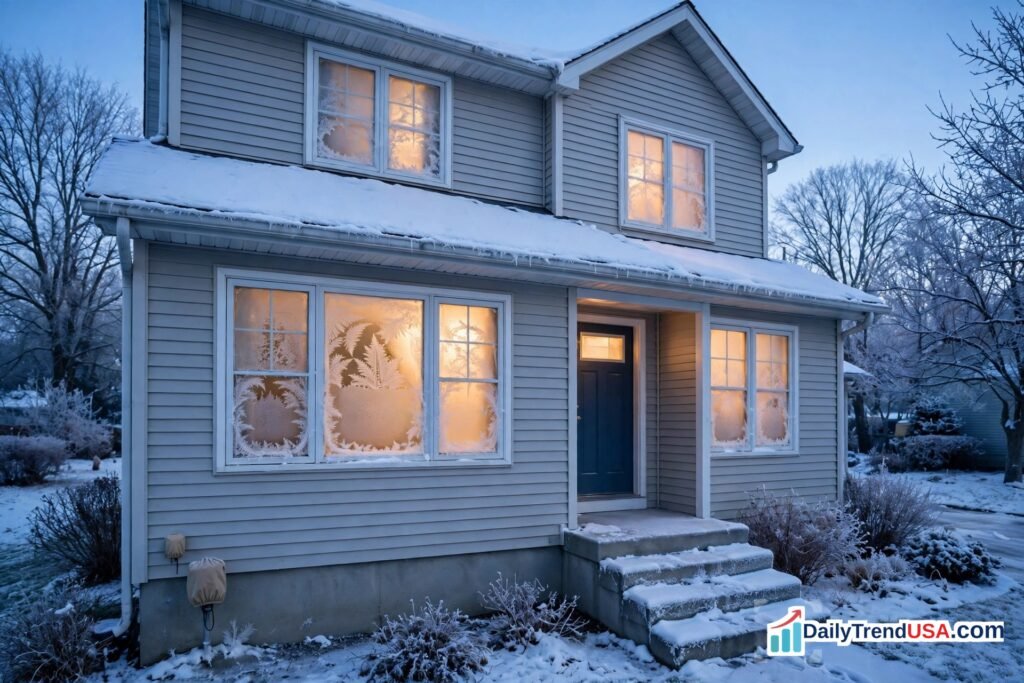
Standfirst: The first hard freeze of the season is when small gaps in a house turn into real problems. Cold air slips through cracks around doors and windows, pipes in unheated spaces freeze and burst, and a heating system that sat idle all summer gets its first real test on the coldest night of the year. Most of that damage is preventable, and the work that prevents it is cheaper and easier now than in the middle of a storm.
Ready.gov puts it simply: prepare your home to keep out the cold with insulation, caulking and weather stripping, learn how to keep pipes from freezing, and test smoke alarms and carbon monoxide detectors with battery backups. The American Red Cross adds one more priority: gather supplies in case you need to stay home for several days without power. The steps below follow that order.
Key facts
| Fact | Detail |
|---|---|
| Keep the heat at or above | 55°F when away from home, Red Cross and Ready.gov guidance |
| Space heater clearance | At least 3 feet from anything that can burn, Red Cross |
| Generator distance | At least 20 feet from windows, doors and attached garages, Ready.gov |
| Air sealing plus insulation | Saves an average of 15 percent on heating and cooling costs, ENERGY STAR |
| Frozen pipe claims | More than 17,200 claims in 2023, $432.5 million paid, State Farm claims data |
| Average frozen pipe claim | Just over $23,500, State Farm 2023 claims data |
| Hypothermia emergency | Body temperature below 95°F is an emergency, Ready.gov |
Seal the drafts first
Cold air gets in through gaps around doors and windows, under exterior doors, and where pipes, vents, wires and ducts pass through walls, floors and the attic. The U.S. Department of Energy notes that air leaks make a home drafty, strain heating equipment, raise bills and can let in moisture that warps wood and causes mold.
Caulk seals the fixed gaps, and weather stripping seals the moving ones. ENERGY STAR estimates that air sealing and added insulation save an average of 15 percent on heating and cooling costs, about 11 percent of total energy costs. Start with the doors and windows, then check the attic hatch, one of the most overlooked leaks in a house.
Insulation is the other half of the job, starting with the attic, then the basement and crawl space. It slows heat loss, but it does not stop air movement on its own, so sealing comes first and insulation second. Do not seal around flues, chimneys or fuel-burning equipment yourself; the Department of Energy recommends hiring a professional for that work.
Protect the pipes
A frozen pipe is the most expensive common winter failure in a house. Water expands as it freezes, and that pressure can break metal or plastic pipe. State Farm paid more than $432.5 million on over 17,200 frozen pipe claims in 2023, an average of just over $23,500 each. Pipes that freeze most often sit in unheated areas, basements, attics, garages, cabinets and crawl spaces, or run through exterior walls with little or no insulation.
Start outside. Remove, drain and store garden hoses, close the inside valves that feed outdoor hose bibs, and open the outside bibs so they drain, leaving the outside valve open so any water left inside has room to expand. Drain swimming pool and sprinkler supply lines the way the manufacturer or installer directs, and do not put antifreeze in these lines unless directed, since it is harmful to people, pets, wildlife and plants.
Inside, add insulation to attics, basements and crawl spaces, which keeps those areas warmer. Both hot and cold water pipes in the garage and under kitchen and bathroom cabinets should be insulated. Pipe sleeves or UL-listed heat tape or heat cable work on exposed pipes, and even a quarter inch of newspaper can help in places that rarely see long stretches below freezing, the Red Cross notes.
When the cold arrives, keep the thermostat set to the same temperature both day and night. Suspending the lower nighttime setting may raise the heating bill a little, but it can prevent a much more costly repair if pipes freeze and burst. Let cold water drip from faucets served by exposed pipes, since running water, even at a trickle, helps prevent freezing. Open kitchen and bathroom cabinet doors so warmer air can circulate around the plumbing, moving any harmful cleaners and household chemicals up out of the reach of children first. Keep garage doors closed if there are water supply lines in the garage. If you will be away, leave the heat on at no lower than 55 degrees Fahrenheit.
Heat the house safely
Heating equipment causes more home fires in winter than at any other time of year. The Red Cross reports that home fire responses run about 30 percent higher during cold months, and the National Fire Protection Association says space heaters are most often responsible for home heating fires.
Keep space heaters at least 3 feet away from anything that can burn, including furniture, rugs, drapes, bedding and clothing. Turn heaters off when sleeping or leaving the room, and never leave one unattended. Plug a space heater directly into a wall outlet, never into an extension cord, and place it on a level, hard and nonflammable surface such as a ceramic tile floor. Never use an oven, a grill or a generator to heat your home: Ready.gov warns that using a gas stovetop or oven for heat can increase the risk of fires and burns and can damage the appliance.
Have fuel-burning heating equipment inspected before the season starts, and change the furnace filter. Install and test smoke alarms and carbon monoxide detectors with battery backups, and test them monthly. Our guide explains how to test smoke and carbon monoxide alarms step by step. If the house has a fireplace, have the chimney inspected and cleaned before the first fire; our winter fireplace and chimney safety guide covers what to check.
Build a storm kit before the freeze
A winter storm can last a few hours or several days, Ready.gov notes, and it can cut off heat, power and communication services. The Red Cross recommends a three-day go kit and a two-week stay-at-home kit with food, water and essential medications, warm clothing, blankets and winter gear. Store at least one gallon of drinking water per person per day, keep extra batteries for radios and flashlights, and keep a phone charger that does not depend on wall power.
Think about the people and pets in the house, including medication needs, and bring pets indoors when the temperature drops. Know where you will go if the home loses heat: a friend’s house, a public library or a warming center. If you cannot afford heating costs, weatherization or energy-related home repairs, contact the Low Income Home Energy Assistance Program (LIHEAP) for help.
Keep a car kit too, in case a storm strands you away from home: jumper cables, sand, a flashlight, warm clothes, blankets, bottled water and non-perishable snacks, plus a full tank of gas. Our guide to what to check when a car will not start in the cold covers the battery checks that matter most on freezing mornings.
If the power goes out
Leave one light on so you know when power is restored, and use flashlights instead of candles. Keep refrigerator and freezer doors closed, and when in doubt about food, throw it out. Generators help only outside: Ready.gov says generators and fuel should always be used outdoors, at least 20 feet away from windows, doors and attached garages. Keep the generator dry, connect it to appliances with heavy-duty extension cords, and let it cool before refueling. Install working carbon monoxide detectors on every level of the home, since carbon monoxide is a colorless, odorless gas that can kill.
Dress in layers if you need to go outside, and watch for cold injury. Frostbite causes loss of feeling and color around the face, fingers and toes, with numbness and white or grayish-yellow, firm or waxy skin. Hypothermia, a body temperature below 95 degrees, is an emergency: shivering, exhaustion, confusion, fumbling hands, memory loss, slurred speech or drowsiness. Get to a warm room, warm the center of the body first, and seek medical help.
What to do if a pipe freezes
If you turn on a faucet and only a trickle comes out, suspect a frozen pipe, most likely against an exterior wall or where the water service enters the home through the foundation. Keep the faucet open so water can flow again as the frozen area melts. Call a plumber if needed. Never try to thaw a pipe with a torch or other open flame, since that is a fire hazard; a hair dryer can work, used with caution. If a pipe has already burst, shut off the main water valve right away and call a plumber.
Seal the leaks, protect the pipes, heat the house safely and keep a kit ready before the first freeze, not after it. A weekend of small jobs in November costs far less than a burst pipe in January.
Sources
Sources: Ready.gov, “Winter Weather,” ready.gov/winter-weather (primary source, read November 21, 2026); American Red Cross winter storm safety guidance, redcross.org (secondary source); ENERGY STAR air sealing and insulation savings estimate; State Farm, “Winter prep 101,” 2023 frozen pipe claims data.