

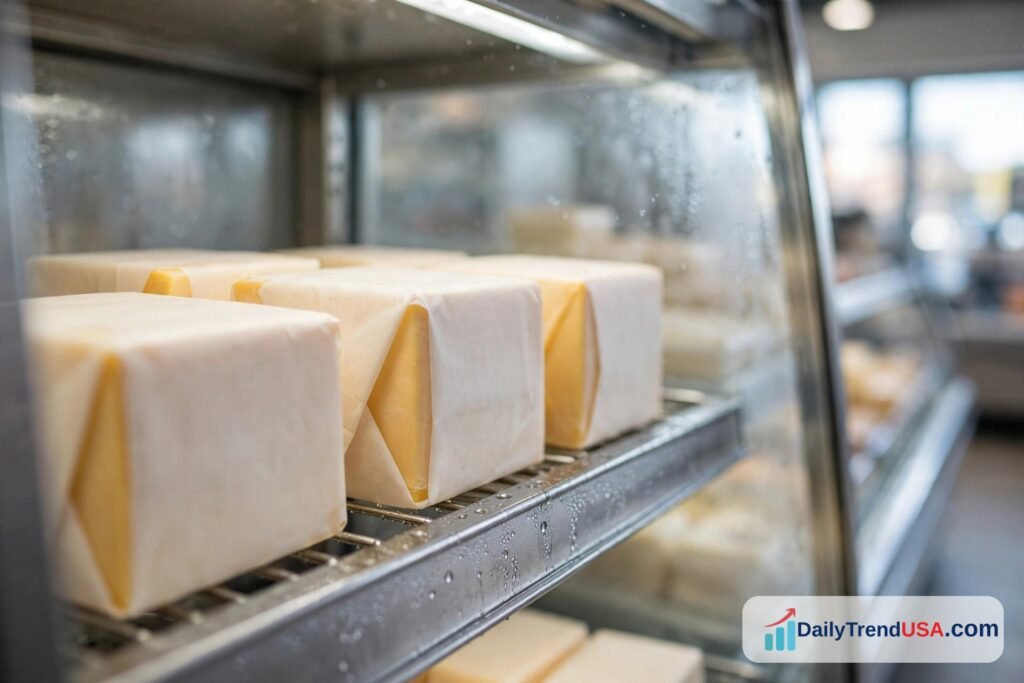
Family Farmstead Dairy is recalling all of its raw mild and raw sharp cheddar cheese in 12 states because the cheese may be contaminated with Listeria monocytogenes, according to a recall notice the Food and Drug Administration posted on November 10, 2026. The recall covers every 8-ounce block with a lot code dated 10/16/27 or earlier, so shoppers should check their refrigerators now, because the cheese stays good until October 2027.
Key facts
| Product | Family Farmstead Raw Mild Cheddar and Raw Sharp Cheddar, 8 oz, plastic wrapped |
| Lot codes | All lot codes dated 10/16/27 and prior |
| States | New York, New Jersey, Vermont, New Hampshire, Massachusetts, Pennsylvania, Rhode Island, Connecticut, Delaware, Virginia, West Virginia, Tennessee |
| Hazard | Potential contamination with Listeria monocytogenes |
| FDA posted | November 10, 2026 |
| What to do | Do not eat it. Return it to the place of purchase for a refund, or call Family Farmstead Dairy at (607) 397-4044, Monday through Friday, 8:00 to 5:00, or email customerservice@familyfarmsteaddairy.com |
What we know
- Family Farmstead Dairy of Worcester, New York, is recalling all of its cheddar cheese products because they may be contaminated with Listeria monocytogenes.
- The recall covers Raw Mild Cheddar and Raw Sharp Cheddar in 8-ounce plastic-wrapped blocks, with all lot codes dated 10/16/27 and prior.
- The cheese was sold through retail stores in 12 states.
- The Food and Drug Administration posted the recall notice on November 10, 2026.
- This is the company’s second cheddar recall in less than a month. On October 15, it recalled one lot of Raw Mild Cheddar over possible E. coli contamination.
What we don’t know
- The notice does not say how the possible Listeria contamination was found.
- The notice does not report any illnesses, and it does not state whether any illnesses linked to the cheese have been reported.
- The notice does not name the stores that sold the recalled cheese.
- The company has not said publicly whether the Listeria concern came from finished cheese, the production environment, or another source.
Which cheese is part of the recall
The recall covers two products: Family Farmstead Raw Mild Cheddar and Family Farmstead Raw Sharp Cheddar, both sold in 8-ounce blocks wrapped in plastic. All lot codes dated 10/16/27 and prior are included. That date is the best-by date, printed on the back label of each block.
It covers every block of both cheeses with a best-by date of October 16, 2027 or earlier. No other Family Farmstead Dairy products are included unless the company specifically identifies them.
The notice lists no UPC codes, so shoppers cannot check a barcode to tell whether their cheese is part of the recall. The date on the back label is the check that counts. If the block is Raw Mild Cheddar or Raw Sharp Cheddar from Family Farmstead Dairy and the date reads 10/16/27 or earlier, it is covered by the recall.
The cheese is made from raw milk, which means milk that has not been pasteurized. The FDA recommends choosing pasteurized dairy products to reduce the risk of foodborne illness, according to USA Today.
Where the recalled cheese was sold
The recalled cheese went to retail stores in 12 states. The states are Connecticut, Delaware, Massachusetts, New Hampshire, New Jersey, New York, Pennsylvania, Rhode Island, Tennessee, Vermont, Virginia, and West Virginia. That list comes straight from the recall notice.
The notice does not name any store or grocery chain, and USA Today reports that the announcement does not list which retailers sold the recalled cheese. Shoppers in those 12 states should check the date on the block rather than assume a particular store is safe.
That is five more states than the company’s October recall, which covered a single lot of Raw Mild Cheddar in seven states: New York, Pennsylvania, New Jersey, Connecticut, Maryland, Virginia, and Massachusetts.
What Listeria can do
Listeria monocytogenes is a germ that can cause serious and sometimes fatal infections in young children, frail or elderly people, and others with weakened immune systems, the recall notice says. Healthy people may have only short-term symptoms, but the risk is much higher for some groups.
The notice lists the short-term symptoms as high fever, severe headache, stiffness, nausea, abdominal pain and diarrhea. For pregnant women, the risk is more serious: Listeria infection can cause miscarriages and stillbirths. USA Today reports that people at the highest risk include pregnant people and their unborn or newborn babies, adults 65 and older, and people with weakened immune systems.
Food contaminated with Listeria may not look, smell or taste spoiled. Food Safety News notes that it can take up to 70 days after exposure for symptoms to develop, so anyone who ate the recalled cheese should watch for symptoms in the coming weeks and tell a doctor about the possible Listeria exposure if symptoms appear.
What to do if you bought the cheese
Do not eat it. Consumers who bought the affected cheddar may return it to the place of purchase for a refund, or contact Family Farmstead Dairy directly for help at (607) 397-4044, Monday through Friday, from 8:00 to 5:00, or by email at customerservice@familyfarmsteaddairy.com.
Check the refrigerator carefully. The best-by dates run to October 2027, so a block bought weeks ago could still be in a fridge drawer, and Listeria grows even in the refrigerator. If the date on the back label is 10/16/27 or earlier, treat the block as recalled.
If you ate the cheese and feel ill, get medical care and mention the possible Listeria exposure. Watch for high fever, severe headache, stiffness, nausea, abdominal pain and diarrhea. Pregnant women should contact a doctor promptly, because Listeria infection during pregnancy can result in miscarriage, stillbirth, premature delivery or life-threatening infection in a newborn.
A second recall in less than a month
This is the second time in less than a month that Family Farmstead Dairy has recalled cheddar. The first recall came on October 15, 2026, and covered one lot of Raw Mild Cheddar Cheese, lot code 7/22/27, best-by July 22, 2027, over possible contamination with Shiga toxin-producing E. coli O26:H11 and O45:H2. The October recall notice is also posted by the FDA.
The October recall was smaller in every way: a single lot, mild cheddar only, seven states. The FDA enforcement report, Event 100137, lists it as Class I, covering 402 lbs, or 67 cases of 12 eight-ounce blocks each.
The October recall also went through a correction: the original notice named E. coli O157:H7 and listed two states, and a corrected notice changed the strains to O26:H11 and O45:H2 and listed seven states, according to MedicalDaily, citing Contagion Live. The FDA notice says a sample in Maryland isolated two strains of Shiga toxin-producing E. coli in two samples of Family Farmstead A2 Raw Cheddar, in an 8-ounce package dated 7/22/27. No illnesses were reported in connection with the October recall.
The November notice says this decision follows the company’s October 15, 2026 recall. The company said in October that it was committed to identifying the cause of that problem, and it has not publicly said whether the Listeria concern came from finished cheese, the production environment, or another source.
Why this recall is wider than the first
Three things make the November recall bigger than the October one: it covers all lots dated 10/16/27 and earlier, not a single lot; both mild and sharp cheddar, not mild cheddar alone; and 12 states, not seven. The hazard is also different: the October germs cause a diarrheal illness that can lead to kidney failure, while Listeria hits pregnant women, newborns, older adults and people with weakened immune systems hardest.
The timing adds to the concern. The best-by dates run to October 2027, so recalled blocks could sit in home refrigerators for most of a year, and the recall notice is the only warning most buyers will get. That is why the date on the back label matters more than the store where the cheese was bought.
The FDA has posted other food recalls this fall, including a warning about raw oysters from Stellar Bay Shellfish: https://dailytrendusa.com/stellar-bay-oyster-recall-warning-circulating/ . Another is the recall of Brad’s kale chips over a possible thallium risk: https://dailytrendusa.com/brads-kale-chips-recalled-thallium-risk/ .
How to check your refrigerator
Start with the cheese drawer. Look for any block marked Family Farmstead, in mild or sharp cheddar, in an 8-ounce plastic-wrapped package. Turn it over and read the date on the back label. That date is the lot code. If it reads 10/16/27 or earlier, the block is recalled.
Do not rely on memory or on where you bought it. The notice names 12 states but no stores. The date is the reliable check. For a step-by-step guide to checking a kitchen after a recall notice, see https://dailytrendusa.com/food-recall-check-kitchen-affected/ .
Returning the cheese is better than throwing it away: the place of purchase will refund it, and a return tells the store that recalled stock is still reaching shoppers. If returning it is not practical, contact Family Farmstead Dairy at (607) 397-4044 or customerservice@familyfarmsteaddairy.com.
The FDA notice is dated November 10, 2026. If the recall expands, the FDA will post an update. The company has apologized for any inconvenience and says it remains committed to producing safe, high-quality dairy products.



One Comment