Standfirst: Three frozen snack products sold under the BetterBallen brand are the subject of a public health alert from the U.S. Department of Agriculture’s Food Safety and Inspection Service (FSIS). The snacks contain sesame that is not listed on the label, and the beef product also contains fish, in the form of anchovy in Worcestershire sauce, that is not listed either. The alert, issued on November 6, 2026, is not a recall, because the products are no longer for sale. But they keep in the freezer until October 2027, so FSIS warns that some packages may still be sitting in home freezers right now.
Key facts
| Fact | Detail |
|---|---|
| Alert issued | November 6, 2026, by USDA FSIS |
| Products covered | 6-piece Bami Rolls, 10-piece Saté Kroketten, 12-piece Bitterballen |
| Brand | Betterballen |
| Undeclared allergens | Sesame in all three products; fish (anchovy) in the beef product |
| Production dates | October 15, 16, and 27, 2026 |
| Best by date | October 2027 |
| Establishment number | EST. M3177 or EST. P3177, inside the USDA mark of inspection |
| Recall or alert? | A public health alert only; no recall was requested |
| Illnesses reported | No confirmed reports of adverse reactions |
| What to do | Do not eat the products; throw them away or return them to the place of purchase |
Which products are covered
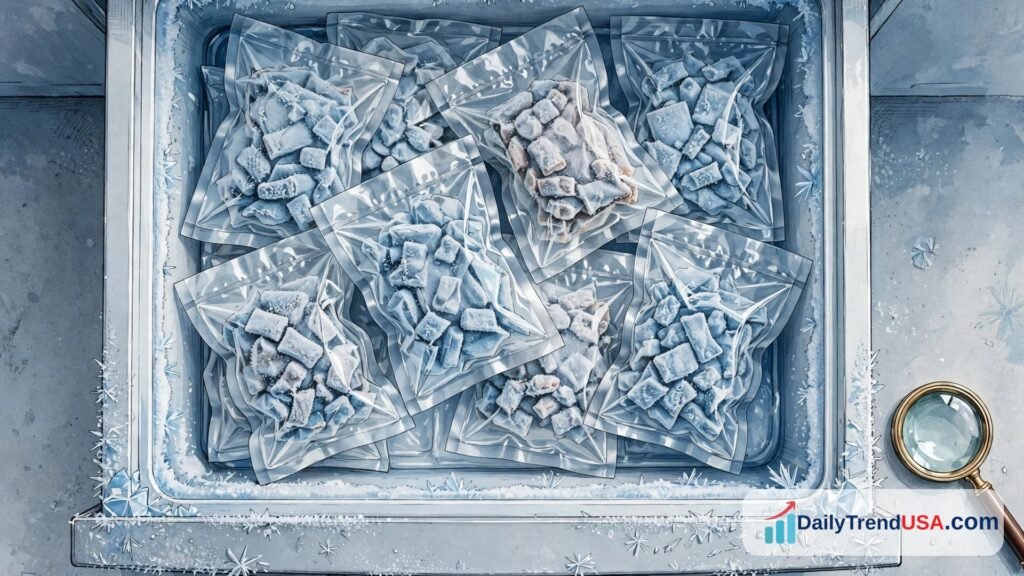
The alert covers three frozen, not ready-to-eat meat and poultry products from Betterballen Foods LLC, all in clear vacuum-packed packages with a best by date of October 2027. They were produced on October 15, 16, and 27, 2026.
The first is the 6-piece Bami Rolls, with lot codes BR-2026-01 and BR-2026-02. The second is the 10-piece Saté Kroketten, with lot code SK-1026-01. The third is the 12-piece Bitterballen, with lot code BB-1026-01. The lot codes are the fastest way to tell whether a package in your freezer is part of the alert. The products also carry the establishment number EST. M3177 or EST. P3177, printed inside the USDA mark of inspection.
All three are frozen and not ready to eat, so they need cooking before eating. Cooking does not remove an allergen, so a person with an allergy would still be at risk even if the snacks were cooked as directed.
Why sesame and fish matter
Sesame and fish are both major food allergens under federal law, and both must be declared on food labels. Sesame became the ninth major allergen in the United States when the Food Allergy Safety, Treatment, Education, and Research (FASTER) Act took effect on January 1, 2023.
For a person with a sesame allergy, eating food that contains sesame without warning can trigger a serious allergic reaction. Symptoms can include hives, swelling, and trouble breathing, and in severe cases anaphylaxis, a life-threatening reaction that needs emergency treatment. The same is true for a fish allergy. Anchovy is a fish, so Worcestershire sauce made with anchovy is a fish allergen even though the word fish does not appear in the sauce name.
The problem with an undeclared allergen is that the label gives the person no chance to protect themselves. Someone with a sesame allergy who reads the label and sees no sesame listed has every reason to think the food is safe. FSIS said there have been no confirmed reports of adverse reactions from eating these products, and anyone concerned about a reaction should contact a health care provider.
Where the snacks were sold
The products were sold by Lowlands House for internet sales nationwide. That means they were shipped to buyers across the country, rather than sold in one region or one chain of stores. Online sales make an alert like this one harder to track, because there is no single store list to check, and the buyer may not remember ordering the snacks, especially if the order arrived months ago.
FSIS also said the items may have been sold at a festival and a farmers market in Greer, South Carolina. A market purchase is easy to forget, since it is a one-time purchase with no receipt in an email inbox. If you bought frozen snacks at an event in Greer, check your freezer for the Betterballen name and the lot codes in this alert. Because the products were sold online and at events, FSIS did not publish a store list.
Why this is an alert, not a recall
It is important to be clear about what this action is. FSIS issued a public health alert, not a recall. A recall was not requested because the products are no longer available for purchase. When a product is already off the market, there is nothing left to pull from shelves, so the agency warns the public directly instead.
That does not make the alert less serious. The products have a best by date of October 2027, so packages bought earlier this year can sit in a home freezer for almost another year. FSIS said it is concerned that some product may still be in consumers’ refrigerators or freezers. A product that is no longer for sale can still be eaten, and that is what the alert is trying to prevent.
A recall works differently. In a recall, the company or the agency asks stores and buyers to return a product that is still on sale or still in distribution. Our report on the Kayem Foods recall of hot dogs and bacon covers a recall of millions of pounds of product, and the Walmart Great Value fruit cocktail recall over lead is another example of a product pulled from shelves while it was still being sold. In this case, there is nothing to pull, so the alert is the tool FSIS used.
How the problem was found
FSIS found the problem during a routine label review. Agency staff check product labels as part of their regular work, comparing the ingredients in a product with what the label declares. In this case, the review found sesame in the products that the labels did not declare, and Worcestershire sauce containing anchovy in the beef product that the labels did not declare either.
Routine label reviews are one of the main ways undeclared allergens come to light, when a company changes a recipe or a supplier without updating the label. The review catches the gap before more product reaches buyers, but it cannot catch packages already in home freezers.
What to do if you have the snacks
Check your freezer for clear vacuum-packed packages labeled Betterballen, with the names Bami Rolls, Saté Kroketten, or Bitterballen. Check the best by date (October 2027) and the lot code: BR-2026-01 and BR-2026-02 for the Bami Rolls, SK-1026-01 for the Saté Kroketten, and BB-1026-01 for the Bitterballen. If the package matches, do not eat it.
FSIS urges consumers who bought these products not to consume them. Throw them away or return them to the place of purchase. If you bought them online from Lowlands House, contact the seller about a return. If you bought them at the festival or farmers market in Greer, throwing them away is the simplest option. Do not give the food to someone else or serve it to guests.
If you have already eaten one of these products and you have a sesame or fish allergy, watch for symptoms and contact a health care provider if you are concerned. If you have trouble breathing or swelling of the face or throat, seek urgent care. Our guide explains how to check whether a food recall affects your kitchen, and the same steps apply here. Questions about the alert can go to Brian Kops, the owner of Betterballen Foods, at 312-340-4823 or brian.kops@betterballenfoods.com.
What we know / What we don’t know
What we know:
- FSIS issued a public health alert on November 6, 2026, for three frozen Betterballen products because of undeclared sesame and fish.
- The products are 6-piece Bami Rolls (lot codes BR-2026-01 and BR-2026-02), 10-piece Saté Kroketten (lot code SK-1026-01), and 12-piece Bitterballen (lot code BB-1026-01), all with a best by date of October 2027.
- The products were produced on October 15, 16, and 27, 2026, and carry establishment number EST. M3177 or EST. P3177.
- The beef product contains Worcestershire sauce made with anchovy, a fish allergen not declared on the label.
- The products were sold by Lowlands House online nationwide and may also have been sold at a festival and farmers market in Greer, South Carolina.
- No recall was requested because the products are no longer available for purchase, and no confirmed reports of adverse reactions have been received.
- FSIS found the problem during a routine label review.
What we don’t know:
- How many packages are still in home freezers, since the products were sold online nationwide and at events with no store list.
- Whether anyone has had an allergic reaction that has not yet been reported to FSIS.
- Whether any other Betterballen products or production dates are affected beyond the three products named in the alert.
Sources
- USDA FSIS, “FSIS Issues Public Health Alert for Meat and Poultry Products Due to Misbranding and Undeclared Allergens”
- Food Safety News, “USDA issues warning about Betterballen beef and chicken products because of undeclared allergens”
- Louisiana First News, “Frozen Bitterballen, Bami rolls contain undisclosed allergens including sesame and fish, USDA warns”