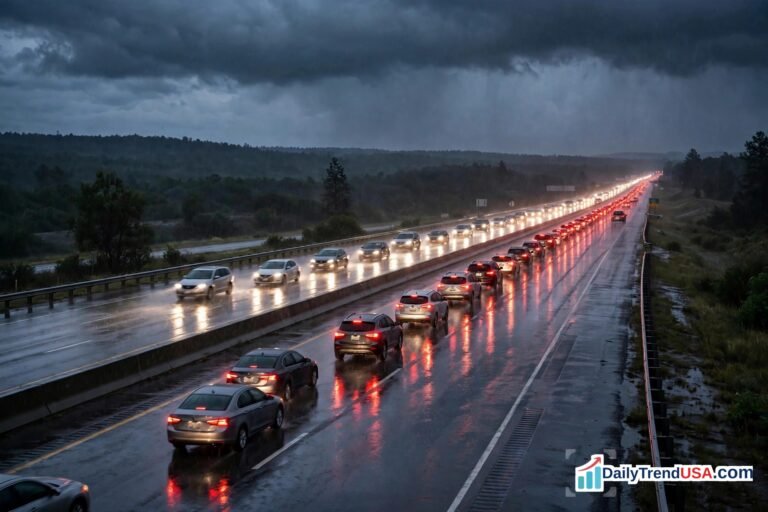
Standfirst: A power outage can start with a storm and last for hours or days. The Thanksgiving storms of November 26 to 27, 2026 left more than 961,000 customers without power at the peak, and winter storms can do the same. The steps below follow guidance from Ready.gov, the Centers for Disease Control and Prevention, and the Food and Drug Administration. They cover the first five minutes, food safety, generators, and what to check when the lights come back.
Key facts
| Fact | Detail |
|---|---|
| Fridge without power | Keeps food cold for about 4 hours if the door stays closed |
| Freezer without power | About 48 hours if full, about 24 hours if half full, with the door closed |
| Food safety limit | Throw out perishable food held above 40 degrees Fahrenheit for 2 hours or more |
| Generator rule | Outdoors only, at least 20 feet from windows, doors, and vents |
| Carbon monoxide | Odorless and colorless gas that kills more than 500 Americans each year, according to the CDC |
| Poison Control | 1-800-222-1222, or call 911 in an emergency |
| Sources | Ready.gov, CDC, FDA, FoodSafety.gov |
The first five minutes
Step 1: Check whether the problem is only in your home. Look out the window to see if your neighbors have power. If they do, check your breaker panel for a tripped breaker or a blown fuse before you call anyone. A single tripped breaker is a common cause of a dark house, and resetting it takes a minute.
Step 2: Report the outage to your utility. If the whole street is dark, call your utility or report the outage through its website or app, and sign up for outage alerts if you have not already. Your report helps the utility find the fault and gives you updates on when power may return. Keep the utility outage number saved in your phone and written on paper, in case your phone dies.
Step 3: Turn off or unplug appliances and electronics. Power can return with a momentary surge or spike that damages sensitive equipment, so Ready.gov advises disconnecting appliances, equipment, and electronics during an outage. Leave one lamp switched on so you will know the moment power returns. Do not open the fridge or freezer while you do this. Every opening lets cold air out and shortens the time your food stays safe.
Keep your food safe
Step 4: Keep the refrigerator and freezer doors closed. This is the single most useful food safety step in an outage. According to the Food and Drug Administration, a refrigerator will keep food cold for about 4 hours if it is unopened, and a full freezer will keep its temperature for approximately 48 hours, or 24 hours if it is half full, if the door remains closed. Plan what you need before you open the door, take it out quickly, and close the door again.
Step 5: Move food to a cooler, then throw out what is no longer safe. If the power has been out for 4 hours and you have a cooler and ice, put refrigerated perishable food in the cooler to keep it at 40 degrees Fahrenheit or below. When power returns, check the temperature with an appliance thermometer or a food thermometer. The FDA says to discard any refrigerated perishable food, such as meat, poultry, seafood, milk, eggs, or leftovers, that has been at temperatures above 40 degrees Fahrenheit for 4 hours or more. Food that still contains ice crystals, or is at 40 degrees Fahrenheit or below, is safe to refreeze or cook. Never taste food to decide if it is safe. When in doubt, throw it out. A stocked winter storm emergency kit should include a cooler and frozen gel packs for exactly this situation.
Light, phones, and information
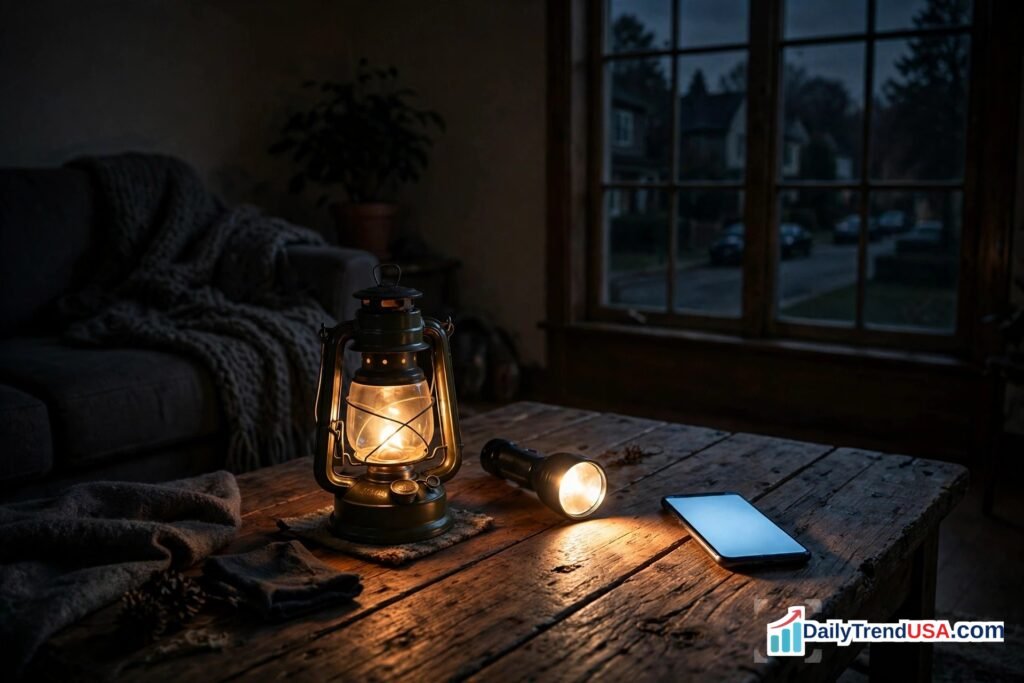
Step 6: Use flashlights and lanterns, not candles. Ready.gov recommends a flashlight for every household member, plus spare batteries. Battery lanterns and headlamps are safer than candles, which can start a fire if they tip over or are left burning in a dark room. Keep flashlights in the same place in every room so no one has to search for one in the dark. A battery powered or hand crank radio keeps you connected to weather updates and emergency broadcasts when the internet and television are down.
Step 7: Save your phone battery for what matters. Charge phones and power banks before a storm arrives, and keep a car charger in the vehicle as a backup. During the outage, lower the screen brightness, close apps you do not need, and use the phone mainly for outage updates and emergency calls. Find out in advance whether your home phone will work when the power is out and how long its battery backup will last, because a phone that runs through your internet connection stops working when the modem and router lose power. A phone left in a cold car or a cold room can also drain fast, so keep it close to your body. Our guide on keeping a phone battery alive in cold weather explains how.
Stay warm or cool safely
Step 8: Close off unused rooms and dress for the temperature. If the outage hits in cold weather, gather everyone in one room and close the doors to the rooms you are not using. That one room holds body heat far better than a whole open house. Wear layers, hats, and gloves indoors, and use extra blankets. In a winter outage, let faucets drip slightly to help keep pipes from freezing, and read our guide on how to keep pipes from freezing before the next cold snap. If heat or cold becomes extreme, go to a community location with power, such as a warming or cooling center, and check with local officials about locations open near you.
Step 9: Never use a gas stove, oven, grill, or camp stove to heat your home. Ready.gov warns that a gas stove or oven used for heat increases the risk of carbon monoxide poisoning and fire. The same applies to charcoal grills and camp stoves, which belong outdoors only. A space heater can help, but only if it is used correctly. Keep it at least three feet from anything that can burn, never leave it running while you sleep, and read our space heater safety guide before you plug one in.
If you run a generator
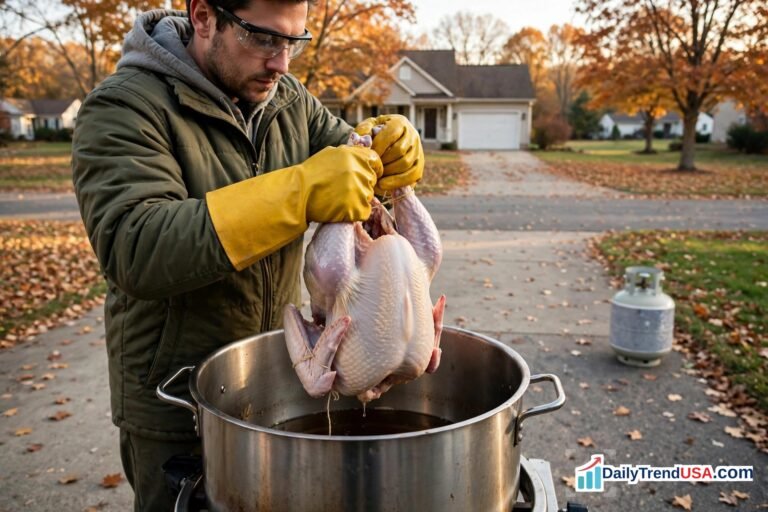
Step 10: Keep the generator outdoors, at least 20 feet from the house. The CDC says never to use a generator, pressure washer, or any gasoline powered engine inside your home, basement, or garage, or less than 20 feet from any window, door, or vent. That rule holds even if the doors or windows are open. Use an extension cord longer than 20 feet to keep the generator at a safe distance, point the exhaust away from your home and your neighbors homes, and run a battery powered or battery backup carbon monoxide detector inside while the generator runs. Never plug a generator directly into a wall outlet. That practice, called backfeeding, can send power back into the grid and electrocute utility workers. Let the generator cool before refueling it, and follow the manufacturer instructions. Our generator safety guide covers these rules in detail.
Watch for carbon monoxide
Step 11: Know the warning signs and act fast. Carbon monoxide is an odorless, colorless gas that can cause sudden illness and death if inhaled, and the CDC says it kills more than 500 Americans each year. The most common symptoms are headache, dizziness, weakness, nausea, vomiting, chest pain, and confusion. If anyone in your home shows these signs during an outage, get outside into fresh air immediately and call 911 or your local Poison Control Center at 1-800-222-1222. Install carbon monoxide detectors with battery backup on every level of your home, and test them monthly. Learn how to test your smoke and carbon monoxide alarms so they are ready before you need them.
When the power comes back
Step 12: Check food, medicines, and the house before you settle back in. Go through the fridge and freezer with a thermometer and throw out anything that spent too long above 40 degrees Fahrenheit. FoodSafety.gov lists what to save and what to discard for each type of food. Check refrigerated medicines with your doctor or pharmacist, and talk to your medical provider in advance about a power outage plan for any medical device that runs on electricity. Plug appliances back in one at a time, and watch for damage from the surge. Look outside for fallen or sagging power lines, and treat every wire as live and dangerous. If a line is down, stay away and call your utility or 911. Finally, restock what you used, recharge your power banks, and write down what worked and what you were missing, so the next outage is easier. The Thanksgiving storms that left 961,000 without power showed how fast a normal evening can turn into a long night without electricity.
Prepare now, before the next outage
Most outages are short, but the households that cope best are the ones that prepared on a calm day. Take an inventory of the items in your home that rely on electricity, and plan batteries or another power source for each one. Keep a flashlight for every person, a battery radio, spare batteries, and a charged power bank. Store enough nonperishable food and water for at least three days, keep a manual can opener with it, and keep your vehicle gas tank at least half full. Ask your medical provider for a plan for powered medical devices and refrigerated medicines, and find out how long a medicine can be stored at a higher temperature. Check on neighbors who are older, live alone, or depend on medical equipment. A little preparation turns a power outage from a crisis into an inconvenience.
Sources
Ready.gov, Power Outages. Centers for Disease Control and Prevention, What to Do to Protect Yourself During a Power Outage. U.S. Food and Drug Administration, Food and Water Safety During Power Outages and Floods. FoodSafety.gov, Food Safety During Power Outage. PowerOutage.us, via the Thanksgiving storms report on Daily Trend USA.