Standfirst: A frozen pipe can burst and flood a home in a single night, and the repair often costs far more than the prevention. Water expands as it freezes, and that expansion can break metal or plastic pipes, the American Red Cross warns. The good news is that most frozen pipes are preventable with a few simple steps: insulate the exposed pipes, keep the heat on, and let a faucet drip when the cold turns severe.
Key facts
| Fact | Detail |
|---|---|
| Why pipes burst | Water expands as it freezes and puts pressure on the pipe |
| Pipes most at risk | Outdoor hose bibs, pool and sprinkler lines, pipes in unheated basements, crawl spaces, attics and garages, and pipes against exterior walls with little insulation |
| Heat while away | Leave the heat on, set to no lower than 55 degrees F |
| Thermostat rule | Keep the same temperature day and night during cold weather |
| Faucet drip | Let cold water drip from a faucet served by exposed pipes |
| Thawing | Use a hair dryer, heating pad or hot towels; never use an open flame |
| If you cannot thaw it | Call a licensed plumber |
Why a frozen pipe is a problem
Water has one habit that makes winter plumbing risky: it expands as it freezes. That expansion puts tremendous pressure on whatever holds it, including metal or plastic pipes. No matter how strong the pipe is, expanding water can break it, according to the American Red Cross.
A burst pipe does not always announce itself. The break often happens while the water inside is still frozen, so the flood starts later, when the ice melts and water flows through the split. That is why a pipe that froze overnight can flood a kitchen or basement the next morning, long after the coldest hours have passed.
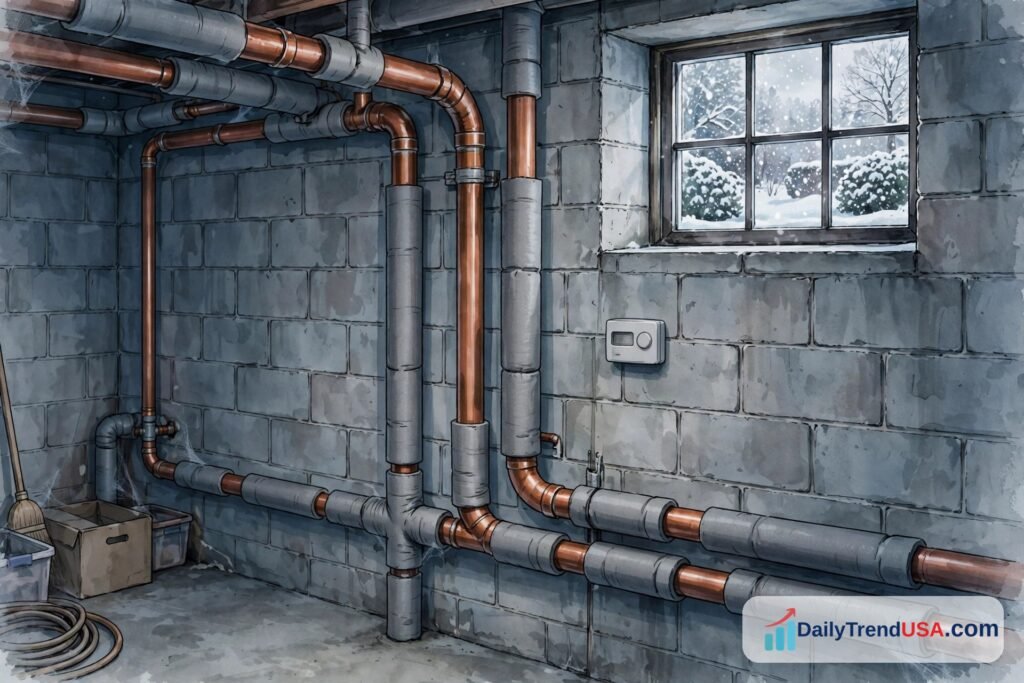
The pipes that freeze most often are the ones you rarely see. The Red Cross lists outdoor hose bibs, swimming pool supply lines and water sprinkler lines first. Next come water supply pipes in unheated interior areas: basements and crawl spaces, attics, garages and kitchen cabinets. Pipes that run against exterior walls with little or no insulation are also at risk. Both hot and cold water pipes in these areas need protection.
Before the cold arrives: insulate and drain
The best time to protect pipes is before the first hard freeze, not during it. Start outside. Remove, drain and store hoses used outdoors. Close the inside valves that supply outdoor hose bibs, then open the outside bibs so water can drain out. Keep the outside valve open so any water left in the pipe can expand without breaking it.
Drain water from swimming pool and water sprinkler supply lines, following the maker’s or installer’s directions. Do not put antifreeze in these lines unless directed. Antifreeze is harmful to the environment and dangerous to humans, pets, wildlife and landscaping, the Red Cross warns.
Inside, add insulation to attics, basements and crawl spaces. Insulation keeps these areas warmer, which protects the pipes inside them. Check around the home for other places where water supply lines run through unheated areas. Look in the garage and under kitchen and bathroom cabinets. Both hot and cold water pipes in these areas should be insulated.
For exposed pipes, the Red Cross suggests products made for the job, such as a pipe sleeve, or UL-listed heat tape or heat cable. Even newspaper can help: a quarter inch of newspaper can give real protection in areas that do not often see long spells below freezing. In some homes, the safest fix is to move an exposed pipe to a warmer spot, though that is a job for a plumber.
During a cold snap: heat, drip, and open cabinets
Once the cold sets in, three habits do most of the work.
First, keep the thermostat set to the same temperature both during the day and at night. Turning the heat down at night saves a little on the heating bill, but it lets the coldest parts of the house cool down, and that is where pipes freeze. A slightly higher heating bill costs far less than a burst pipe repair, the Red Cross notes.
Second, if you will be away during cold weather, leave the heat on, set to a temperature no lower than 55 degrees F. Never turn the heat off entirely in winter, even for a short trip. A house cools faster than most people expect, and pipes in an exterior wall can freeze while the rooms still feel fine.
Third, when the weather is very cold outside, let the cold water drip from a faucet served by exposed pipes. Running water through the pipe, even at a trickle, helps prevent freezing. Open the kitchen and bathroom cabinet doors as well, so warmer air can circulate around the plumbing. If you open a cabinet, move any harmful cleaners and household chemicals up and out of the reach of children.
Keep garage doors closed if there are water supply lines in the garage. An open garage door on a freezing night can chill the pipes inside it in a few hours.
How to tell a pipe has frozen
The usual sign is simple: you turn on a faucet and only a trickle comes out, or nothing at all. Suspect a frozen pipe, especially if the faucet is served by a pipe that runs against an exterior wall or through an unheated space. Likely places for frozen pipes include spots against exterior walls and the place where the water service enters the home through the foundation.
Check the other faucets in the home too. If one pipe has frozen, others may have frozen as well. Finding the full extent of the problem early makes the thaw faster and limits the damage.
How to thaw a frozen pipe safely
If you find a frozen pipe, keep the faucet open. As the frozen area begins to melt, water will start to flow through it, and running water helps melt the ice that is left.
Apply heat to the section of pipe with an electric heating pad wrapped around the pipe, an electric hair dryer, a portable space heater kept away from flammable materials, or towels soaked in hot water wrapped around the pipe. Keep applying heat until full water pressure is restored.
Never use a blowtorch, a kerosene or propane heater, a charcoal stove, or any other open flame device to thaw a pipe. Open flames can start a fire and can damage the pipe. They are also dangerous in the tight, hidden spaces where frozen pipes usually sit.
If you cannot find the frozen area, if it is not accessible, or if you cannot thaw the pipe, call a licensed plumber. Do not keep heating a pipe you cannot see. A plumber has the tools to find the freeze and thaw it without damaging the pipe or the wall around it.
After the thaw: check for damage
Once the water is flowing again, check the pipe and the area around it for leaks. A pipe can split while it is frozen and only start leaking once the ice melts. Look for water stains, damp drywall, dripping joints and puddles under sinks. Run every faucet in the house and watch the water pressure: a sudden drop can mean a second frozen or broken pipe somewhere else.
If you find a leak, turn off the water at the main shutoff valve and call a plumber. Know where that valve is before winter starts, not after a pipe bursts. It is usually near the place where the water line enters the house.
A short checklist before the first freeze
Do the outdoor work first: drain the hoses, close the inside valves to the hose bibs, and drain the sprinkler and pool lines. Then insulate the pipes in unheated spaces and open the cabinet doors under sinks on exterior walls. Set the thermostat to one temperature and leave it there, and never let the house drop below 55 degrees F while you are away. When a hard freeze is forecast, let a faucet drip.
These steps take an afternoon, and they cost little. A burst pipe can take days to repair and can damage floors, walls and belongings. Winter will test every pipe in the house. The ones you protected in advance are the ones that hold.
Related reading: For more winter preparation, see our guide on what to pack in a winter storm emergency kit, our guide on how to prepare your home for freezing weather, and our guide on generator safety during a power outage.
Sources
American Red Cross, “Preventing and Thawing Frozen Pipes”: https://www.redcross.org/get-help/how-to-prepare-for-emergencies/types-of-emergencies/winter-storm/frozen-pipes.html ; How to Prevent Frozen Pipes: Complete Winter Guide (independent guide citing Red Cross and IBHS guidance): https://smartfloodprotection.com/how-to-prevent-frozen-pipes/ . This article gives general home safety information, not professional plumbing advice.