

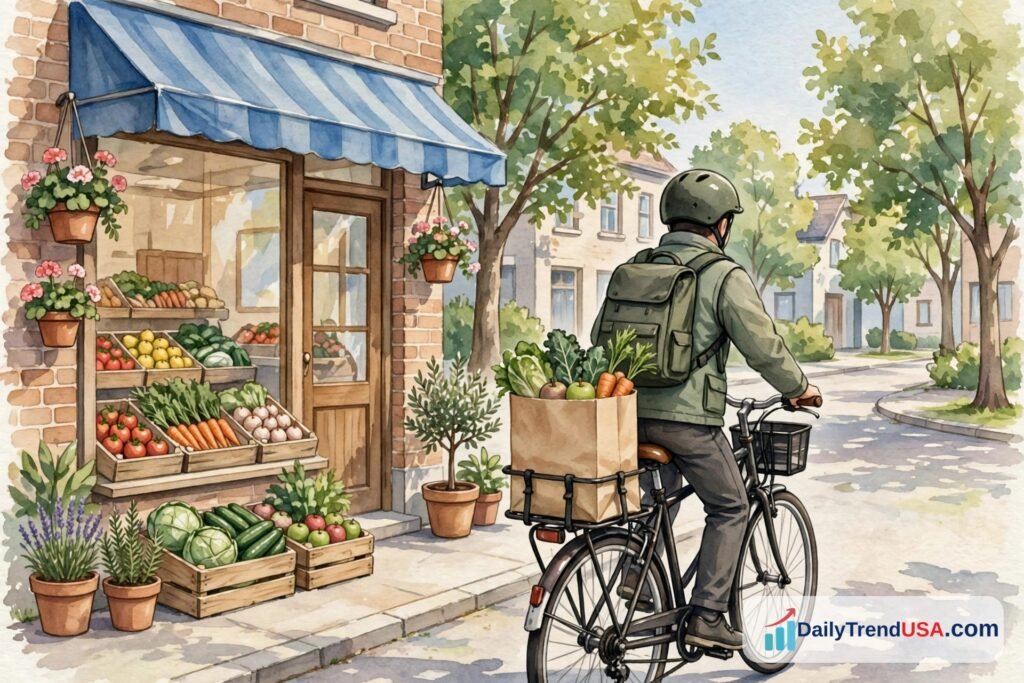
Standfirst: DoorDash announced on Thursday, October 29, 2026, that it will buy Instacart for about $17 billion, joining the biggest US restaurant-delivery app with the biggest US grocery-delivery platform. Nothing changes for shoppers right away: the deal is not expected to close until late 2027 or early 2028, and both apps are set to keep running.
What we know / What we don’t know
What we know:
- DoorDash and Instacart (whose corporate name is Maplebear Inc.) announced a definitive agreement on October 29, 2026.
- The deal values Instacart at $65.00 per share, or an equity value of about $17 billion.
- Instacart shareholders can choose cash, DoorDash stock, or a mix, with at least 75% of the total paid in cash.
- Instacart’s board of directors unanimously approved the agreement.
- DoorDash says it expects to keep the Instacart brand, its app, and its enterprise technology products after the deal closes.
- The deal is expected to close in late 2027 or the first half of 2028, subject to approvals.
- DoorDash reported third-quarter 2026 results the same morning, with adjusted earnings before interest, tax, depreciation and amortization up 41% to $1.06 billion on revenue up 34% to $4.6 billion, according to MarketWatch.
What we don’t know:
- Whether regulators will approve the deal, and whether they will attach conditions. Approval is needed under US antitrust law, plus regulatory approvals in Canada and Israel.
- Whether Instacart shareholders will approve it. Shareholders holding about 19% of Instacart’s shares have agreed to vote in favor, but the full vote has not happened yet.
- What, if anything, will change for shoppers on prices, fees, delivery times, or memberships. Neither company has announced changes to what customers pay.
- Whether Dashers and Instacart shoppers will see changes to how they earn. DoorDash says the combination will give them “more ways to earn,” but no new pay terms have been announced.
The announcement
DoorDash said on Thursday morning that it had reached a deal to buy its grocery-delivery rival, ending days of reports that the two companies were in advanced talks. The Wall Street Journal first reported the talks on Monday, October 26, and Reuters reported the same day that a deal could be finalized as soon as that week.
The confirmed price is $65 a share. That is an 11% premium to Instacart’s closing price of $58.42 on Wednesday, and about 26% above its closing price of $51.68 on October 22, before reports that the company was exploring a sale, according to the Journal. Instacart shares had already climbed after the talks were reported, hitting a record high of $62 on Monday, Reuters reported.
DoorDash plans to fund the cash part of the deal with cash on hand and debt financing, and says JPMorgan Chase has committed to provide a bridge loan. The company says it aims to keep investment-grade credit ratings.
“This is about helping local stores win,” DoorDash said in its announcement, titled “DoorDash to Acquire Instacart to Help Local Stores Win.” The companies say the combined business will offer grocers and retailers DoorDash’s delivery network plus Instacart’s grocery and fulfillment technology, in both apps and on stores’ own websites.
Why DoorDash wants Instacart
The two companies serve different halves of the same habit. Families tend to turn to Instacart for the big weekly grocery shop, and to DoorDash for meals and smaller orders they want in under an hour, the companies said in their announcement. DoorDash already delivers from retailers such as Kroger, Safeway, and Aldi, the Journal noted, but grocery is a harder business to get right than restaurant delivery: someone has to pick a ripe avocado, find a substitute the customer would actually choose, and get ice cream home before it melts.
“Grocery is one of the hardest things to get right online,” DoorDash co-founder and CEO Tony Xu said in the announcement. “Instacart has spent years learning to do that well for grocers, while DoorDash has built a delivery network and technology that local stores rely on every day.”
Instacart CEO Chris Rogers said the company had spent 14 years transforming online grocery, and that joining DoorDash would let it do “even more” for retailers, brands, customers, and shoppers.
The deal also fits a wider wave of consolidation in delivery. Reuters noted recent deals including Just Eat Takeaway’s $7.3 billion acquisition of Grubhub, DoorDash’s purchases of Wolt and the UK’s Deliveroo in 2025, and Uber’s $15 billion deal for Delivery Hero earlier this year. Restaurant delivery growth has slowed since the pandemic peak, while grocery and everyday retail delivery is still growing.
What changes for shoppers — and what does not
For now, the honest answer is: nothing. The deal has been announced, not completed, and the companies say closing is more than a year away. Until then, DoorDash and Instacart remain separate companies, and customers should keep using whichever app they already use.
When the deal does close, DoorDash says customers can expect more stores to choose from, more savings opportunities when shopping with local businesses, and faster delivery options. Instacart customers could eventually be able to shop at more than 50,000 additional stores through DoorDash’s network, according to the announcement. Grocers could also add delivery capacity through DoorDash’s DashMart Fulfillment Services and offer faster, more accurate, and more affordable delivery.
What has not been promised is lower prices or lower fees. No announcement has said delivery fees, service fees, or membership prices will change, in either direction. Shoppers should treat any claim that the merger will automatically make delivery cheaper — or more expensive — as speculation until the companies say otherwise or regulators weigh in.
One thing DoorDash did promise is continuity: it expects to keep the Instacart brand, its enterprise technology products, and its app after the deal closes. That suggests shoppers will not be forced onto a single app on day one, though the companies have not published a detailed plan for how the two apps will work together over time.
What it means for stores, Dashers, and shoppers who deliver
For local grocers and retailers, the pitch is that they get both halves of the toolkit: Instacart’s technology for running their own websites and retail media networks, and DoorDash’s delivery network for getting orders out the door. Small and mid-size stores that cannot build their own delivery fleets, warehouses, or AI shopping tools are the intended winners, the companies said.
For Dashers and Instacart shoppers, DoorDash says the combination will create “more ways to earn,” because the same delivery network will serve both grocery and restaurant orders. No new pay rates, tip rules, or scheduling terms have been announced, so couriers should watch for actual policy updates rather than assuming changes.
For brands that sell through grocery stores, the companies say the combined business offers a scaled alternative for reaching shoppers online, with advertising and AI tools from both companies.
The hurdles before this closes
A deal of this size does not close on announcement. It still needs approval from Instacart shareholders, the expiration or end of the waiting period under the Hart-Scott-Rodino Antitrust Improvements Act, other regulatory approvals including in Canada and Israel, and other customary closing conditions, according to the announcement.
Regulatory review is the biggest open question. Analysts quoted before the announcement warned regulators could look closely at combining two of the largest US delivery platforms, but no regulator has announced a position on the confirmed deal.
Shareholder approval is the other hurdle. Instacart’s board approved the deal unanimously, and shareholders holding about 19% of outstanding shares have agreed to vote for it. The rest of the vote is still to come.
How we got here
This is not the first time the two companies have talked. Reuters reported that DoorDash held talks to buy Instacart in 2021, when the company’s estimated value was far higher, and that those talks collapsed over price and antitrust concerns. The current round began, according to The Information, with Instacart exploring a sale and holding preliminary discussions with potential buyers including Uber and DoorDash. Uber’s talks are no longer active, Reuters reported on October 26.
In a separate move, Instacart said in a regulatory filing on Monday that it would wind down its Caper Cart smart shopping-cart business by the end of the second quarter of 2027, expecting related pre-tax charges of $55 million to $80 million, Reuters reported.
DoorDash also moved up its third-quarter earnings report to Thursday morning, a signal, the Journal noted, that deal news was coming.
What to watch next
Three dates matter most. First, the earnings call: DoorDash said it would discuss the transaction on its earnings call at 5:30 a.m. PT (8:30 a.m. ET) on Thursday, with materials at ir.doordash.com. Second, the Instacart shareholder vote, which has not yet been scheduled. Third, the regulatory review, which will play out over the coming year and will determine whether the late-2027 or early-2028 closing target holds.
Related reading
More from Daily Trend USA: Instacart to Pay $5 Million to Settle Federal Claims It Discriminated Against U.S. Job Applicants and Airbnb Bans Checkout Chores: What’s Changing for Guests and Hosts.
Sources
- DoorDash, Inc., “DoorDash to Acquire Instacart to Help Local Stores Win,” investor-relations press release, October 29, 2026 (primary source, read directly): https://ir.doordash.com/news/news-details/2026/DoorDash-to-Acquire-Instacart-to-Help-Local-Stores-Win/default.aspx
- Reuters, “DoorDash strikes $17 billion deal for US rival Instacart in bets on grocery delivery,” October 29, 2026: https://www.reuters.com/legal/transactional/doordash-strikes-17-billion-deal-us-rival-instacart-bets-grocery-delivery-2026-10-29/
- The Wall Street Journal, “DoorDash to Buy Instacart for $17 Billion,” October 29, 2026: https://www.wsj.com/business/deals/doordash-to-buy-instacart-for-17-billion-7d6a6f3f
- MarketWatch, “DoorDash stock rises after deal to buy Instacart for $17 billion,” October 29, 2026: https://www.marketwatch.com/livecoverage/stock-market-today-s-p-500-nasdaq-dow-alphabet-earnings-results-amazon-intel/card/doordash-stock-rises-after-deal-to-buy-instacart-for-17-billion-jg1IGZ7T6rJXa9YoezTS
- FinancialContent (Business Wire release text), “DoorDash to Acquire Instacart to Help Local Stores Win,” October 29, 2026: https://markets.financialcontent.com/stocks/article/bizwire-2026-10-29-doordash-to-acquire-instacart-to-help-local-stores-win
Fact-check note: The central claim — a definitive $17 billion agreement at $65 per share — was verified against DoorDash’s own investor-relations press release (read directly) and corroborated by Reuters and The Wall Street Journal. A corrections search found no correction or withdrawal of the October 29 announcement; the only correction found concerned an October 26 talks article’s quarter reference, which does not affect deal terms. Share-price moves are reported as market reaction only, not as investment advice.



2 Comments