

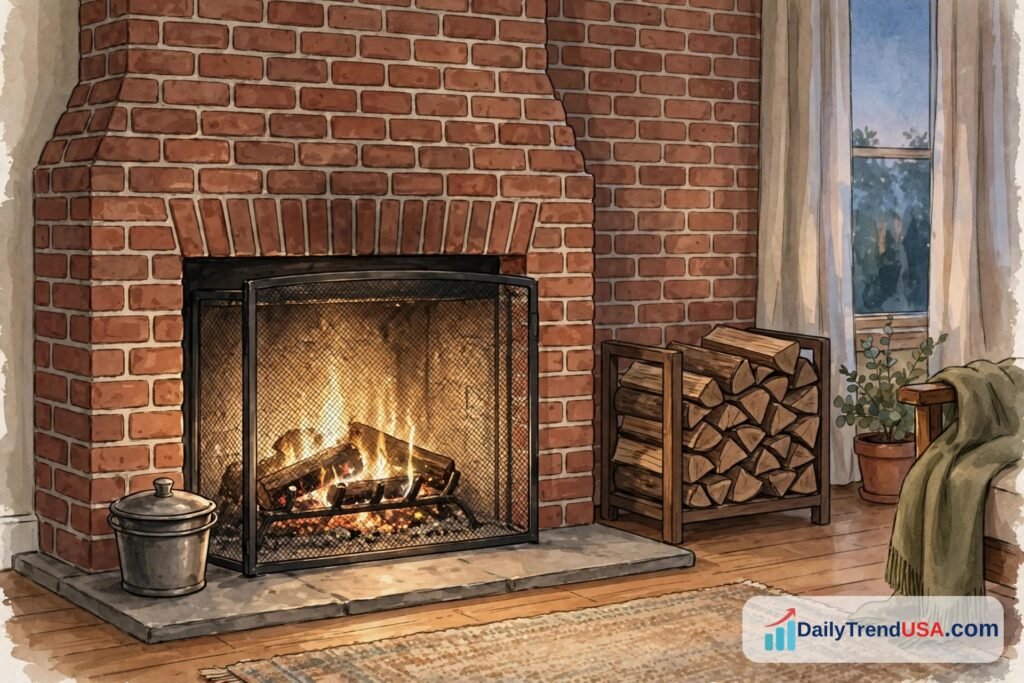
Standfirst: A fireplace makes a cold evening feel warm, but it is also open flame inside a home. The National Fire Protection Association reports that fire departments answered an estimated annual average of 37,365 home heating equipment fires from 2020 through 2024, and nearly half of them, 46 percent, happened from December through February. Fireplaces and chimneys were involved in about three in ten of those fires. Most of them are preventable, and the work starts before the first log goes on the grate.
Key facts
| Fact | Detail |
|---|---|
| Heating fires per year | About 37,365 on average, 2020 to 2024 (NFPA) |
| When they peak | 46 percent happen from December through February |
| Fireplaces and chimneys | Involved in about 3 in 10 home heating fires |
| Leading cause | Failure to clean equipment, with creosote buildup a particular issue |
| Chimney rule | Inspected and cleaned every year by a qualified professional |
| Clearance | Keep anything that can burn at least 3 feet from the fireplace |
| Ashes | Let them cool, then store in a metal container at least 10 feet from the home |
| Wood | Burn only dry, well-seasoned wood; never burn trash, cardboard or treated wood |
Why heating fires peak in winter
Heating is the second leading cause of home fires and home fire injuries in the United States, according to the National Fire Protection Association. It is also the third leading cause of home fire deaths. The fires follow the cold: fire departments see the most heating fires in December, January and February, when furnaces, fireplaces and wood stoves run hardest and longest.
Fireplaces and chimneys were involved in about three in ten home heating equipment fires, and the leading cause of those fires was a failure to clean the equipment. Creosote buildup in chimneys is a particular problem. Creosote is the tar-like residue left when wood smoke cools and sticks to the inside of the flue. It is highly flammable, and a hot fire can set it alight inside the chimney, where it burns out of reach and out of sight.
A chimney fire can crack the flue, spread to the walls around it, and let carbon monoxide into the home. That is why the safety advice for fireplaces starts with the chimney, not with the fire itself.
Step one: get the chimney inspected every year
Have heating equipment and chimneys cleaned and inspected every year by a qualified professional. That is the advice of both the National Fire Protection Association and the U.S. Fire Administration, and it is the national standard: chimneys, fireplaces and vents shall be inspected at least once a year for soundness, freedom from deposits, and correct clearances, with cleaning, maintenance and repairs done if necessary.
An inspection is not the same as a sweeping. A sweeping removes deposits. An inspection checks whether the whole system is sound: the flue liner, the masonry or metal, the damper, and the clearances around the chimney. A certified chimney sweep can also spot nests, leaves and other blockages. A blocked chimney can send smoke and carbon monoxide back into the room, so the check matters even in a year when the fireplace was barely used.
Book the inspection in the fall, before heavy use begins. If the sweep finds creosote buildup, have it cleaned before the first fire. Ask for a sweep certified by the Chimney Safety Institute of America, and keep the receipt and the inspection note with your home records.
Creosote: the fuel you cannot see
Creosote forms every time wood burns. As smoke, water vapor, gases, unburned wood particles and tar fog rise into the cooler chimney, they condense and stick to the flue walls. That residue is creosote, and it can be crusty and flaky, tar-like and sticky, or shiny and hardened. Every form is highly flammable.
Three things speed up creosote buildup: a restricted air supply, unseasoned wood, and a chimney that runs cooler than normal. Never restrict the air supply to a fireplace. A slow, smoldering fire looks gentle, but it makes more creosote than a hot, clean-burning one. Burn only dry, split, well-seasoned wood, and season firewood for at least six months before burning it.
Never burn household trash, cardboard, plastics, foam, colored-ink paper, painted or pressure-treated wood, plywood, particle board, or ocean driftwood in a fireplace. The U.S. Fire Administration adds a simple rule: do not burn paper in your fireplace. Christmas trees and wrapping paper are also off limits. They burn fast and hot, throw sparks, and can release fumes. A fireplace is for seasoned wood only.
The three-foot rule and the screen
Keep anything that can burn at least three feet from all heating equipment, including fireplaces, furnaces, wood stoves and space heaters. That means rugs, furniture, bedding, clothing, curtains, firewood stacks, holiday garlands and cardboard boxes. Measure three feet out from the fireplace opening and from the sides of the hearth, and keep that zone clear.
Create a three-foot kid-free zone around open fires and space heaters as well. Children and pets should stay three feet away from heating equipment. Matches and lighters belong up high, out of children’s sight and reach, ideally in a locked cabinet.
Fireplaces should have a sturdy screen to stop sparks from flying into the room. Glass doors help where the design calls for them. The point is a barrier between the fire and the room, not a decoration. Check that the screen is stable and that it covers the full opening before the first fire of the season.
While the fire is burning
Open the damper before lighting the fire, and keep it open until the embers are fully out. A closed damper sends smoke into the room and lets carbon monoxide build up. Never close the damper while the fire is still burning or smoldering.
Start with a small fire and build it up slowly. Do not overload the fireplace with logs. A fire that is too large can overheat the chimney and ignite creosote. Keep the fire under control and never leave it unattended. Put the fire out before you go to sleep or leave the house.
All fuel-burning equipment should be vented to the outside to avoid carbon monoxide poisoning. Carbon monoxide is colorless and odorless, so a blocked flue or a closed damper can be dangerous without any warning smell. That is why a working carbon monoxide alarm belongs in every home that burns fuel, and why it should be tested every month.
Never use an oven to heat your home. An oven is not a heater, and running it for warmth can fill the house with carbon monoxide and start a fire.
Ashes: cool, covered, and far from the house
Ashes can stay hot for days, long after the fire looks dead. Let them cool fully before moving them. Then put them in a metal container with a tight-fitting lid, and keep that container at least 10 feet from the home and other buildings. Do not put ashes in a paper bag, a cardboard box, or the kitchen trash. Wet the ashes down in the metal container before storing it outside.
The same rule applies to a wood stove. Empty the ash pan only into a metal container, and store it outdoors on a surface that cannot burn. A single hot ember in a bag of ashes has started more than one house fire.
Gas fireplaces need checks too
A gas fireplace does not make creosote, but it still needs care. Have it inspected every year by a qualified professional, along with the vent and the gas line. Keep the glass and the burner area clean, following the maker’s instructions. If the flame looks yellow or lazy instead of blue and steady, or if you smell gas, turn the unit off, leave the house, and call the gas company or the fire department from outside.
A gas fireplace still burns fuel, so it still needs a vent to the outside and a working carbon monoxide alarm nearby. The same three-foot rule applies: keep anything that can burn at least three feet away.
The first-fire checklist
Before the first fire of the season, work through this list. Book the annual chimney inspection and cleaning with a qualified professional. Clear three feet around the fireplace and the hearth. Check that the screen is sturdy and covers the opening. Check that the damper opens and closes freely. Test the smoke alarms and the carbon monoxide alarm. Make sure the ash container is metal, lidded, and stored outside.
Then burn only dry, seasoned wood, keep the fire small and attended, and let the ashes cool before moving them. A fireplace rewards care with years of safe evenings. The chimney check is the part that makes the rest of it safe.
Related reading: For more winter safety, see our guide on what to pack in a winter storm emergency kit, our guide on generator safety during a power outage, and our guide on how to prepare your home for freezing weather.
Sources
National Fire Protection Association, “U.S. home heating fires peak during winter months” (January 22, 2026) and NFPA home heating safety tips; U.S. Fire Administration, Heating Fire Safety; Chimney Safety Institute of America, NFPA 211 inspection standard and creosote guidance; U.S. Environmental Protection Agency, Burn Wise best wood-burning practices. This article gives general home safety information, not professional inspection advice.



One Comment