

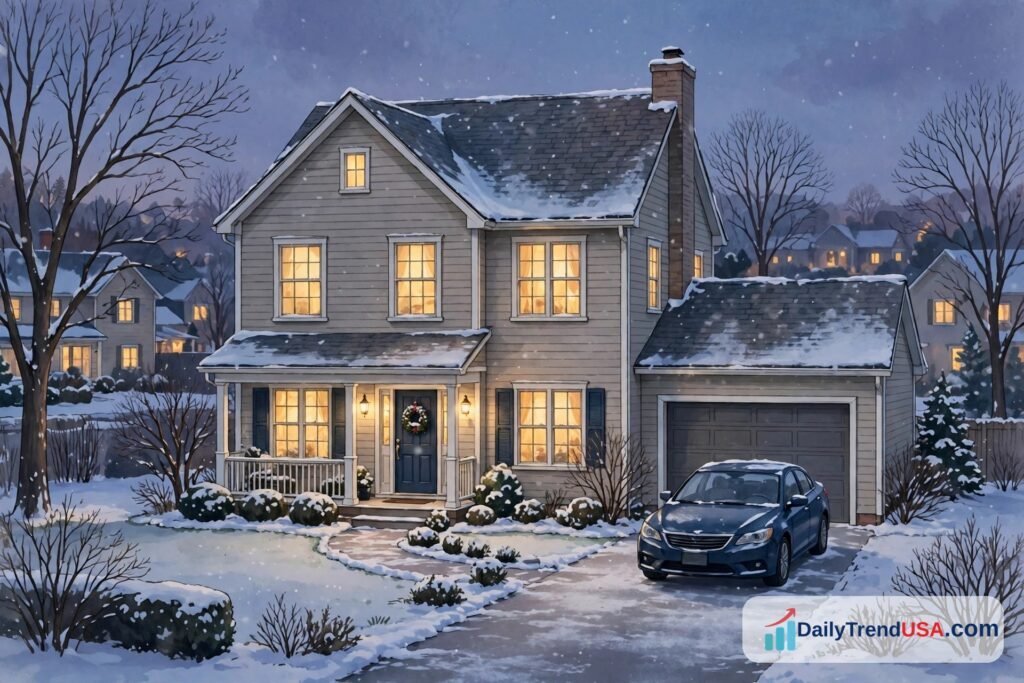
Standfirst: Millions of Americans travel for Thanksgiving and Christmas, and many homes sit empty for days at a time. A home that looks empty is an easy target, and a cold snap while you are away can burst a pipe before anyone notices. The good news is that a few simple steps before you leave can cover both risks. The post office can hold your mail for up to 30 days, a light timer costs only a few dollars, and keeping the heat on at 55 degrees or higher protects your pipes while you are gone.
Key facts
| Fact | Detail |
|---|---|
| Mail hold | USPS Hold Mail service holds mail for up to 30 days |
| Heat while away | Keep the thermostat at 55 degrees Fahrenheit or higher |
| Lights | Use timers so lights turn on and off at normal times |
| Deliveries | Pause or redirect deliveries so packages do not pile up |
| Social media | Do not post travel plans or photos until you are home |
| Check-in | Ask a neighbor or trusted person to check the house |
Stop the signs that no one is home
A pile of mail is the clearest sign a house is empty. Before you leave, ask the post office to hold your mail. You can set it up online or at your local post office, and delivery resumes on the date you choose. If you get packages often, pause deliveries or send them to a locker, a neighbor, or your workplace instead. A stack of boxes on a porch tells anyone walking by that no one is home to bring them in.
Lights on a timer make a house look lived in. Set two or three lamps on timers in different rooms, and set them to turn on in the evening and off at bedtime, the way you would use them yourself. A porch light left on around the clock looks just as empty as a dark house, because it never changes. If you have smart bulbs, you can vary the schedule a little each night, which looks more natural than the same pattern every evening.
Small details matter too. If you normally bring your trash bins in on collection day, ask a neighbor to do it while you are away. Bins left at the curb for days are another sign no one is home. If you have a car you are leaving behind, park it in the driveway instead of the garage, so the house looks occupied. Leave a pair of shoes by the door and a coat on a hook if they are visible from outside. None of these tricks work alone, but together they make the house look like someone is living in it.
Keep water and heat in check
Cold is the biggest risk to an empty house in winter. Water pipes can freeze and burst when the temperature drops, and a burst pipe can flood a home for days before anyone notices. The simplest protection is to leave the heat on. Set the thermostat to at least 55 degrees Fahrenheit, even if that feels warm for an empty house. It is far cheaper than repairing water damage.
Open the cabinet doors under kitchen and bathroom sinks. Warm air from the room can then reach the pipes inside the cabinets, which sit against cold outside walls. If your home has pipes in an unheated garage or crawl space, make sure they are insulated before winter arrives. Letting a faucet drip slowly can also help in a hard freeze, but it is a backup, not a replacement for keeping the heat on.
Know where your main water shutoff is before you leave. If a pipe does break while you are away, a neighbor who knows where the shutoff is can stop the water in minutes instead of hours. Tell your check-in person where it is, and show them if you can. If you are going away for a long trip in the coldest part of winter, some homeowners shut off the water and drain the pipes entirely. That is a bigger job, and it is worth doing only if you are comfortable with it or can get a plumber to help.
Lock up the right way
Check every door and window, not just the front door. Walk around the house the night before you leave and test each one. Basement windows and back doors are the spots people forget, and they are the spots a burglar checks first. Lock the door between the garage and the house too, even when the garage door is closed. If you have a sliding door, put a bar or a dowel in the track so it cannot be forced open.
Take spare keys inside. A key under the mat or in a fake rock is the first place anyone looks. Give a spare to the neighbor who is checking on the house instead, and take it back when you return. If you use a smart lock, check that its batteries are fresh and that you can lock and unlock it from your phone. Do not share a temporary code with anyone except the person you trust to check the house, and change or delete the code when you get home.
Do not leave a ladder or tools outside. A ladder leaning against the house is an open invitation to a second-floor window. Lock tools and ladders in the garage or shed, and lock the shed as well. Close and lock all gates so the backyard is not an easy way in.
Be careful what you post
Wait until you are home to share trip photos. A photo from the airport or a holiday dinner tells everyone following you that your house is empty right now. That includes posts that seem harmless, like a countdown to your trip or a picture of packed bags. Even a post that does not name your town can give away that you are away, because your friends and followers know where you live.
Check your location settings. Many phones add a location to photos automatically, and some apps share your location with friends by default. Turn off location sharing for the trip, and check that your posts do not show where you are. If your children post about the trip, remind them to wait too. A family trip is worth sharing, but it is worth sharing after you are back home.
Ask someone to check in
A trusted person checking the house is the best protection of all. Ask a neighbor or a friend to stop by every day or two. Give them a short list: bring in any mail that slips through, check that the heat is running, look under sinks for leaks, and walk around the outside for anything unusual. Leave them your phone number and the number of someone local who can help if something goes wrong.
Leave a light on inside and a way to reach you. A single lamp on a timer is enough. Make sure your check-in person knows how to reach you, and that you can be reached. If a pipe bursts or a window breaks, a fast call to you is worth more than any alarm. If you have a security camera, check that it is working before you leave, and that you can see its feed from your phone. A camera does not stop a break-in, but it can alert you while there is still time to call a neighbor or the police.
If something looks wrong when you get home, do not go in. If a door is open, a window is broken, or the house looks disturbed, stay outside and call the police. Do not walk through the house to check what is missing. The same applies to water: if you come home to a flooded floor, turn off the water at the main shutoff if you can do it safely from outside the wet area, and call a plumber.
What to do when you get home
Walk through the house before you unpack. Check the thermostat first, then look under every sink and around the water heater for leaks. Flush the toilets and run the taps for a minute, because water that sat in the pipes for days can taste stale. If you held your mail, confirm delivery has resumed. If a package was left while you were away, bring it in right away.
Reset your timers and codes. Put your lights and thermostat back on your normal schedule. Delete any temporary lock codes you shared, and take back the spare key from your neighbor. If you paused any deliveries or subscriptions, restart them. A quick check now saves you from finding a problem days later, when it has had time to get worse.
Related reading: For more holiday help, see our guide to protecting holiday packages from porch pirates, our guide to preparing your home for freezing weather, and our guide to testing smoke and carbon monoxide alarms.
Sources: guidance consistent with the U.S. Postal Service Hold Mail service, Ready.gov home safety guidance, and the National Weather Service winter weather safety guidance.



One Comment