

Standfirst: Apple has confirmed that a small number of its new folding iPhone Duo units have inner-display problems, and it says affected owners should contact AppleCare for a replacement. The company has not said what causes the problem or how many phones are affected. Here is what Apple actually said, what remains unknown, and what owners should do next.
What we know
Apple’s statement: Apple said on Monday, October 26, 2026, that it is “aware of an issue impacting the inner display on a small number of iPhone Duo units.”
Apple’s advice: “If users experience issues with their iPhone Duo display, they should contact AppleCare for a replacement.”
When it appeared: The problems showed up over the weekend after the phone started shipping last week, with owners posting photos of cracks and lines in the inner display along the central hinge where the phone folds.
How quickly: Apple says affected units tend to show the problem quickly, not after months of use.
AppleCare+ not required: 9to5Mac, which received Apple’s statement directly, reports two extra details from Apple: owners do not need AppleCare+ to get a replacement for this problem, and owners who bought through a carrier should contact AppleCare directly, not the carrier.
No cause given: Apple has not given a technical cause. iFixit, using teardown footage, patents, and CT scans, built a 3D simulation and found the reported damage clustered just below where a display cable runs under the screen near a central support bar. iFixit suggests that bar might fail to drop out of the screen’s way as the phone folds, creating a small stress hotspot near the reported break point. Apple has not commented on iFixit’s findings.
What we don’t know
The cause: What actually causes the inner display to crack. Apple has not commented on a cause, and iFixit’s hinge explanation is a simulation-based theory, not a confirmed finding.
How many: How many iPhone Duo units are affected. Apple says only a “small number,” but it has not given a figure, and some cracked-screen photos circulating online have turned out to be fake, AI-generated images, according to 9to5Mac.
Formal program: Whether Apple will open a formal repair program, or simply handle cases one by one through AppleCare.
Replacement speed: How fast replacements will arrive. Reuters notes that initial online orders sold out in minutes and analysts expect supply constraints, because the folding phone is complex to make.
Key facts
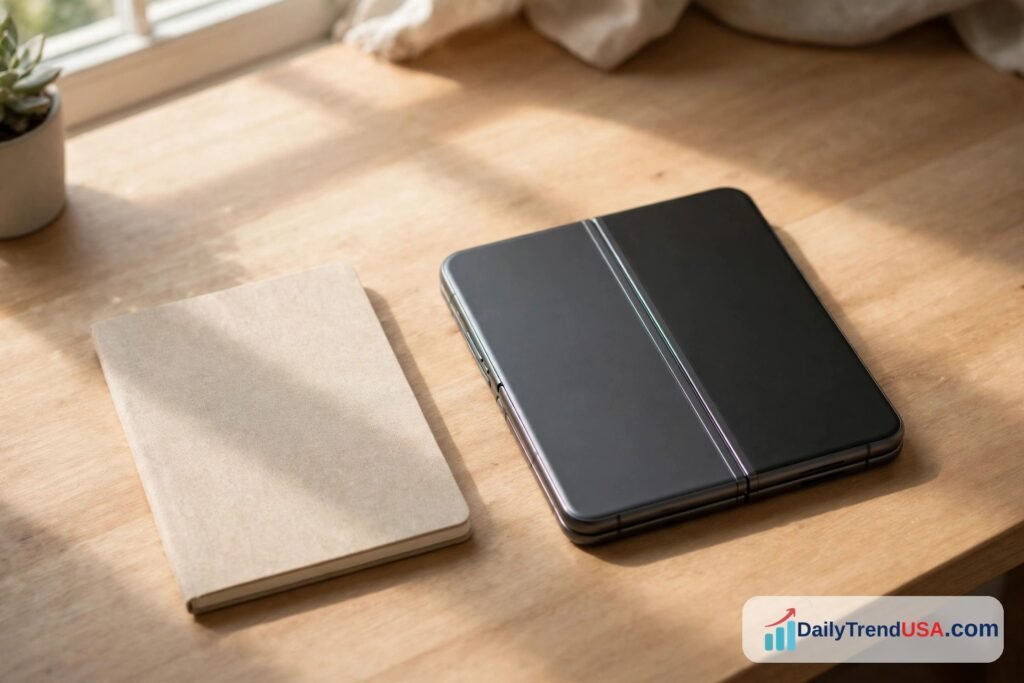
Device: iPhone Duo, Apple’s first folding iPhone, which unfolds like a passport booklet. Problem: Cracks and lines in the inner display, along the central hinge. When it appeared: Weekend of October 24–25, 2026, days after shipping started. Apple’s statement: October 26, 2026: aware of an issue on a “small number” of units; contact AppleCare for a replacement. AppleCare+ needed? No, for this problem, according to details from Apple reported by 9to5Mac. Carrier buyers: Contact AppleCare directly, not the carrier, according to 9to5Mac. Cause: Not stated by Apple; iFixit offers a hinge-bar theory Apple has not commented on. Out-of-warranty inner-display repair price: $999 in the US, per Apple’s published repair pricing — this is not the price Apple points affected owners to under this statement.
Background: a brand-new phone, days old
The timing is what makes this story matter. The iPhone Duo is Apple’s first folding phone, and it only started shipping last week. Reuters reports that customers around the world lined up for tight inventory after initial online orders sold out in minutes. Analysts have warned that Apple is likely to face supply limits because the Duo, which unfolds like a passport booklet, is complex to manufacture.
Then, over the weekend, social media posts began showing the same kind of damage again and again: cracks and lines in the inner display, right along the central hinge where the phone folds. Some owners said the problem appeared within hours of getting the phone, and in a few cases during the first setup, according to Notebookcheck’s summary of the weekend reports. Some affected screens also showed a horizontal band of bright or stuck pixels.
That pattern — the same place, on phones only days old — is why the story moved fast on Monday. It is also why readers should be careful about judging the scale of the problem from social media alone. 9to5Mac notes that while a number of user reports on Reddit showing the issue are legitimate, a handful of fake, AI-generated reports have also circulated. A photo online is not proof of how widespread a defect is, and Apple has not published a count.
What Apple actually said
Apple’s full statement, as published by 9to5Mac, reads: “The response to iPhone Duo from early users has been incredibly positive, and we are seeing exciting things from developers who are rapidly updating their apps to take advantage of its unique form factor. We are aware of an issue impacting the inner display on a small number of iPhone Duo units. If users experience issues with their iPhone Duo display, they should contact AppleCare for a replacement.”
Reuters, reporting the same statement on October 26, adds that Apple said affected units tend to show the problem quickly, and that Apple did not comment on what might cause the issue.
Two points in that statement deserve plain reading. First, Apple calls it “an issue impacting the inner display,” not accidental damage by the owner. That wording matters to owners, because out-of-warranty inner-display repair on the iPhone Duo is listed at $999 in the US in Apple’s published repair pricing — about half the phone’s $1,999 starting price, according to Notebookcheck and MacRumors summaries of that pricing. Second, the remedy Apple points to is a replacement through AppleCare, not a repair appointment for the screen alone.
The extra details reported by 9to5Mac answer the two questions owners asked first. You do not need to have bought AppleCare+ to get a replacement for this problem, 9to5Mac reports Apple as saying. And if you bought your Duo from a carrier, you should go to AppleCare directly, not back to the carrier, to get the device replaced. For Apple’s other recent hardware news, see Apple M6 MacBook Pro and iMac: Preorders Open, Ships Nov 6.
What iFixit thinks might be happening — and what it does not prove
iFixit, a company known for teardown reports and repair guides, said it used teardown footage, patents, and CT scans to build a 3D simulation of the iPhone Duo hinge, then compared that simulation with the places where damage has been reported.
Its finding, as reported by Reuters, is that the reported damage clustered just below where a display cable runs under the screen near a central support bar. iFixit suggests that bar might fail to drop out of the screen’s way as the phone is folded, “creating a small stress hotspot near the reported break location.”
That is a useful theory, but it is not a confirmed cause. It is a simulation matched against public reports, not an inspection of Apple’s design files or a statement from Apple. Apple has not commented on iFixit’s findings, and this article does not present the hinge-bar idea as fact. If Apple later explains the cause, this article should be updated with that explanation, and the iFixit theory should be kept clearly labeled as a theory.
iFixit also concluded that the iPhone Duo is the most repairable foldable phone it has tested, according to Reuters. That is a separate point from the screen problem, but it matters for owners wondering about long-term repair options: the inner display cover layer alone, for example, is listed at $49 out of warranty, or $19 with AppleCare+, in Apple’s published pricing — a much smaller job than a full $999 inner-display replacement.
Why Apple’s speed matters
Francisco Jeronimo, a vice president at market research firm IDC, told Reuters that Apple’s quick replacement offer was the “right first step” in responding to the problems. He pointed to Samsung’s original Galaxy Fold problems in 2019, saying a fast and transparent response can contain the damage to a category.
That history is the reason to watch Apple’s next move closely. A folding phone is a new category for Apple, and early buyers are also early testers in practice, even if they did not sign up for that role. A quick, no-argument replacement path keeps trust. A slow or disputed path — owners told a crack is their fault, or told to pay a $999 repair bill on a days-old phone — would do the opposite, and would likely become a bigger story than the defect itself.
For now, Apple has taken the first step Jeronimo describes: acknowledge the issue, name the remedy, and tell owners exactly who to contact. What is missing is the second step: an explanation of the cause, and any sense of how many phones are involved.
What to do if your iPhone Duo screen breaks
If your inner display shows a crack or lines along the hinge, these steps follow directly from Apple’s statement and the extra details reported by 9to5Mac. Contact AppleCare: That is the route Apple names in its statement. Use the Apple Support app or Apple’s support site to start the case. Do not go back to your carrier first: If you bought through a carrier, 9to5Mac reports Apple as saying you should contact AppleCare directly. Take clear photos before you hand the phone over: Photograph the crack and the hinge area, and note when the problem first appeared — Apple says affected units tend to show it quickly, so the date helps your case. Back up your phone if the screen still works: A replacement means a new device, so save photos, messages, and files first where you can. Do not try to fix the fold yourself: The inner display and hinge are not a home repair, and opening the phone could complicate a replacement claim. Keep your proof of purchase handy: Every iPhone Duo sold so far is still inside its first year, and Apple is pointing affected owners to a replacement, not a paid repair — but having the receipt ready still speeds up support.
If AppleCare tells you something different from Apple’s public statement — for example, that you must pay for the repair — ask for the case to be reviewed against the October 26 statement, and keep a record of the case number and the name of the person you spoke to. For more on Apple’s newest AI hardware story, see Google Unveils Gemini 4 Carbon, Its Strongest AI Yet — and for a consumer-protection explainer, How to Spot a Fake Online Store Before Holiday Shopping.
What to watch next
Three things will decide whether this stays a small launch problem or grows into a larger one. A cause from Apple: If Apple explains the hinge or cable issue, owners will know whether to worry about phones that look fine today. A number: Even a rough range — dozens, hundreds, or more — would replace social-media guesswork with fact. Replacement speed: With inventory tight and online orders having sold out in minutes, how long will owners wait for a replacement phone? That answer will come from owners’ experiences in the coming days, not from a press statement.
Until Apple provides those answers, the safe summary is the one Apple itself gave: a small number of units are affected, the problem tends to show quickly, and owners with display issues should contact AppleCare for a replacement.
Sources: Apple statement on iPhone Duo inner-display issue, October 26, 2026, as reported by Reuters (Stephen Nellis and Aditya Soni); Apple statement in full, as published by 9to5Mac, October 26, 2026; iFixit hinge simulation findings, as reported by Reuters; weekend owner reports and repair-pricing context, Notebookcheck, October 26, 2026. Corrections check, October 26, 2026: no correction, withdrawal, or retraction of the Reuters or 9to5Mac reports was found. Apple has not commented on a cause, and iFixit’s hinge explanation remains unconfirmed by Apple.