Standfirst: Cold weather is hard on cars and on drivers. AAA says a battery loses about 35 percent of its strength at 32 degrees F and about 60 percent at 0 degrees F, while starting the engine can take up to twice the normal current. A winter car emergency kit in the trunk can turn a long, cold wait into a safe one. Here is what to pack, where to keep it, and what to do if you get stuck.
Key facts
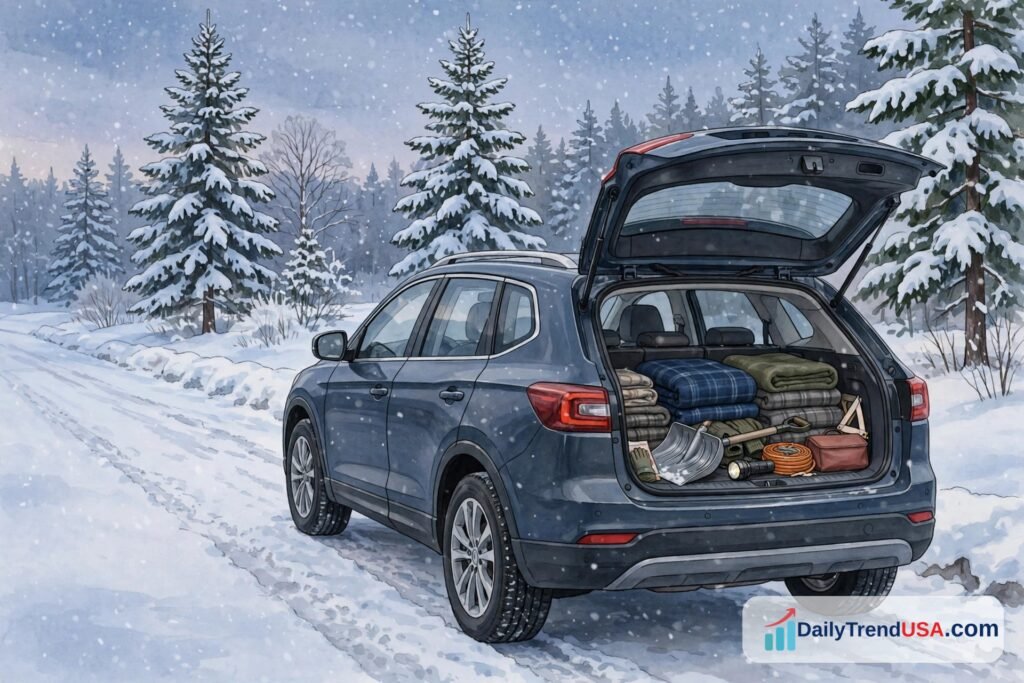
- Warmth: Blankets, a hat, gloves, a scarf and thick socks for each person
- Getting unstuck: A shovel, an ice scraper, a snow brush, and sand, salt or cat litter
- Being seen: A flashlight with extra batteries, plus flares or reflective triangles
- Power: Jumper cables or a charged portable jump starter
- Food and water: Drinking water, non-perishable snacks and a first-aid kit
- Battery in the cold: About 35 percent weaker at 32 degrees F, about 60 percent at 0 degrees F
- Fuel: Keep the tank full in winter
- Check the kit: Every fall, before the first freeze
Warmth comes first
If a car breaks down in winter, staying warm is the first job. A blanket is the single most useful item in the kit, and AAA lists blankets at the top of its winter list. Pack a warm blanket or two, plus a change of warm clothes that stays in the car: a hat, gloves, a scarf and thick socks. A foil space blanket folds up small and reflects body heat, so it is a good backup to a wool or fleece blanket. Hand and foot warmers are cheap, light and worth adding.
Pack these items for the people who ride with you, not just for yourself. A blanket for each person is the goal, and children need warm layers too. Keep the warmth layer in a bag you can reach without digging through the whole trunk. In a real stop, cold hands and a dark trunk make every extra step harder.
Getting unstuck and being seen
The second group of items helps the car move again, or helps others see it while it waits. AAA’s winter list names a snow shovel, a snow brush, an ice scraper and a bag of abrasive material such as sand, salt or cat litter, or traction mats. A small folding shovel fits in a trunk and can dig a tire out of packed snow. Sand or cat litter spread under the drive wheels can give grip where the tires spin.
Being seen matters as much as moving. Pack a flashlight with extra batteries, and check the batteries each fall. Warning devices such as flares or reflective triangles tell other drivers to slow down and give space. A phone and a portable charger belong in this group too, so a call for help is always possible. Keep the phone charged before a winter drive, and keep the charger in the car, not at home.
Jump-starts and small repairs
Winter kills batteries, and a dead battery is the most common reason drivers get stranded in the cold. Jumper cables are on every AAA and Ready.gov list, and they only help if they are in the car and in good shape. Check them when you pack the kit. Look for cracked insulation, bent clamps or rust, and replace a set that looks worn. A portable jump starter is a good option too, since it needs no second car, but it must be charged and checked just like cables.
A basic tool kit rounds out this group. AAA names screwdrivers, pliers and an adjustable wrench. Add winter-formula window washer fluid, a cloth or a roll of paper towels, and a tire gauge. A jack, a lug wrench and a flat board to set the jack on are the tire-changing basics, and they are worth keeping in the car all year, not just in winter.
AAA also lists a small type ABC fire extinguisher for the car, with one clear warning: learn how to use it before you ever need it. Read the instructions at home, not on the side of the road.
Food, water and first aid
The last group covers the wait itself. Pack drinking water and non-perishable snacks, such as granola bars or crackers, and keep enough for everyone in the car. A first-aid kit should hold gloves, bandages, antiseptic ointment, gauze pads and tweezers. Add any medications the people in the car need, and check expiry dates when the seasons change.
Keep the fuel tank full in winter. Ready.gov gives that advice for a simple reason: a full tank means the heater can run longer if the car is stuck, and it lowers the chance of fuel line trouble in deep cold. Fill up before a long winter drive, not during it.
Where to keep the kit, and when to check it
A kit only helps if it is in the car when trouble comes. Pack the items in a sturdy bag or a plastic box in the trunk, where they will not slide around. Keep the flashlight, the phone charger and the blanket where they can be reached fast. Do not bury the kit under luggage on a trip. If the trunk is full, move the most urgent items, the blanket and the flashlight, to the back seat.
Check the kit each fall, before the first freeze. Test the flashlight, charge the jump starter, look at the jumper cables, and replace snacks and water that have been sitting all year. Check the first-aid kit and the medications. A kit packed once and forgotten will fail at the worst time, so make the check part of getting the car ready for winter, along with the tires and the battery.
If you get stuck, stay with the car
The kit is only half the plan. If the car gets stuck in snow or breaks down in bad weather, the safest move in most cases is to stay with it. A car is easier for rescuers to find than a person walking in a storm, and it gives shelter from wind and cold. Tell someone your route and your expected arrival time before a winter drive, so help knows where to look.
If you run the engine for heat, clear snow from the exhaust pipe first and crack a window, so exhaust fumes do not build up inside the car. Run the engine in short bursts for heat rather than leaving it on for hours. Turn on the hazard lights, and tie a bright cloth to the antenna or door handle if you have one, so the car is easy to spot. Use the phone to call for help, and save the battery by keeping calls short.
A winter car kit is a small job with a large payoff. One afternoon of packing, and one check each fall, covers the whole cold season. Blankets, a shovel, jumper cables, a flashlight, water and snacks fit in a single bag, and they are the difference between a bad hour and a dangerous one.
Related reading: For more winter preparation, see our guide on what to pack in a home winter storm emergency kit, our guide to cold weather tire pressure, and our guide on what to do when your car skids on ice.
Sources
- AAA, “What to Pack in a Car Emergency Kit” and “Emergency Vehicle Kit” (AAA Washington, AAA Oregon); Ready.gov, “Winter Weather” car kit guidance; AAA winter driving guidance on cold-weather battery strength (about 35 percent loss at 32 degrees F, about 60 percent at 0 degrees F).