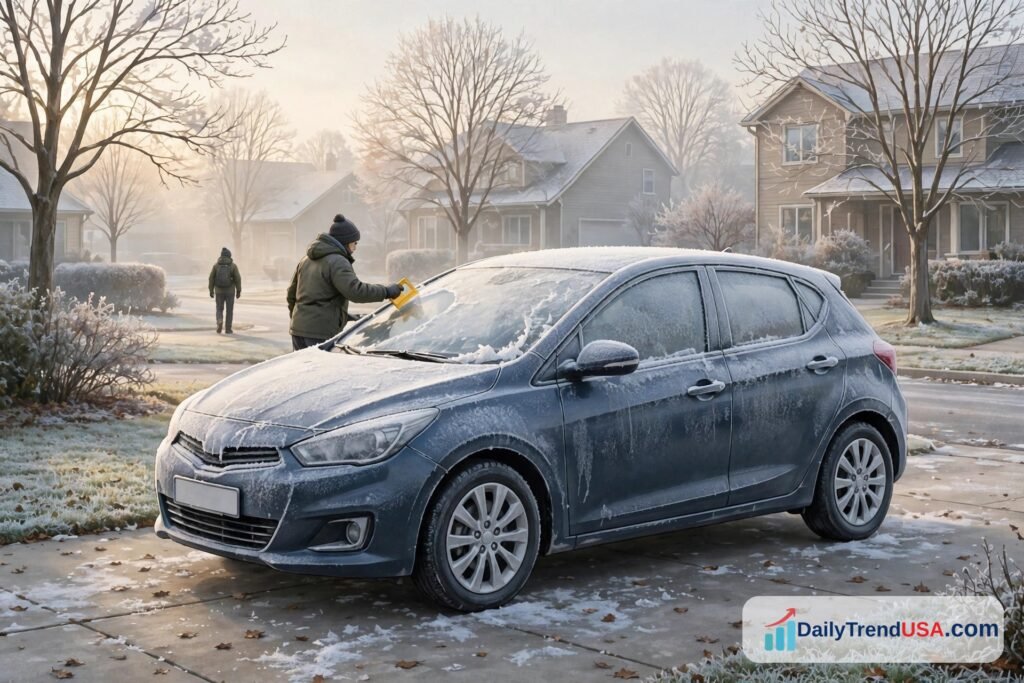
Standfirst: Ice on a windshield is one of winter’s most annoying morning chores, and doing it wrong can crack the glass or scratch it for good. The safe way is simple, but it is not always the fast way people hope for. Start the car, set the defroster correctly, and clear the ice by hand while the heat builds. Ice starts to form when the temperature drops to 32 degrees Fahrenheit, so on any morning near freezing, expect to spend a few minutes on the glass before you drive.
Key facts
| Fact | Detail |
|---|---|
| Ice forms at | 32 degrees Fahrenheit |
| Best heat setting | Defroster on high, with the air conditioner on |
| Air setting | Fresh air from outside, not recirculated air |
| Best scraper | Plastic ice scraper, not metal |
| Never use | Boiling water on a frozen windshield |
| Biggest risk | Driving with a small peephole scraped in the ice |
Start with the defroster, not the scraper
Start the car and turn the defroster to its highest setting. Point the heat at the windshield and set the fan to high. Turn the air conditioner on at the same time, even though it feels wrong in winter. The air conditioner dries the air, and dry air clears fog and frost faster than warm, damp air. Set the air to fresh air from outside rather than recirculated air, because recirculated air holds the moisture from your breath and keeps the glass foggy.
Give it a minute before you scrape. The heat needs time to reach the glass, and the first minute of warm air softens the bond between the ice and the windshield. While you wait, clear snow off the roof, the hood, and the trunk. Snow left on the roof slides onto the windshield when you brake, and snow on the hood blows back onto the glass at speed. In many states, driving with snow piled on the roof can also get you a ticket.
Lift the wipers off the glass before the ice melts. Wiper blades can freeze to the windshield overnight, and turning them on while they are stuck can tear the rubber or burn out the wiper motor. Lift them gently by hand. If a blade is frozen down, wait for the defroster to loosen it rather than pulling hard. Check that the blades are in good shape, because worn blades smear water across the glass instead of clearing it.
Clear the ice by hand
Use a plastic ice scraper and work from the edges inward. A plastic scraper is firm enough to break ice and soft enough not to scratch the glass. Hold it at a low angle and push in short strokes. Start at the edges, where the ice is usually thinnest, and work toward the middle. A long-handled scraper with a brush on the other end is worth keeping in the car all winter, because it reaches the middle of the windshield without stretching across the hood.
Do not use a metal tool. A metal scraper, a spatula, or a credit card can scratch the glass, and a scratch in a windshield is permanent. The same goes for a key or a knife, which some people reach for when they are in a hurry. If the ice is too thick to scrape, wait longer for the defroster instead of pressing harder. Pressing hard on thick ice is also how people crack a windshield, because the pressure lands on one cold spot.
Clear the whole windshield, not just a peephole. It is tempting to scrape a small patch to see through and drive off, but that is dangerous and illegal in most states. You need to see the whole road, including the sides, and a peephole leaves blind spots on both sides. Clear the side windows and mirrors too, and make sure the rear window is clear before you reverse. A few extra minutes at the curb is far safer than guessing at what is beside you.
What not to do
Never pour boiling water on a frozen windshield. This is the most common mistake, and it is the one most likely to crack the glass. A windshield is made of two layers of glass with plastic between them, and sudden heat on one spot makes the outer layer expand faster than the inner layer. The result is often a crack that runs across the whole windshield. Warm water is not safe either. The temperature gap is what causes the damage, and even warm water on very cold glass is a risk.
Do not leave the car running unattended to warm up. It is tempting to start the car and go back inside, but an idling car with the keys in it is an easy target for theft, and some towns and cities ban unattended idling. If your car has remote start, use that instead, because the doors stay locked and the keys stay with you. If you do wait in the car, stay with it and keep the doors locked.
Do not use hot tap water in the washer reservoir. Some drivers fill the washer bottle with warm water to melt ice, but the fluid cools quickly and can freeze in the lines or on the glass, making the problem worse. Use a winter washer fluid rated for freezing temperatures instead, and check the level before cold weather arrives. A de-icer spray made for windshields is a safer shortcut than any homemade hot water trick, but it is not a replacement for the scraper and the defroster.
Do not pour salt water or brine on the glass. Salt melts ice on roads, but on a windshield it leaves a film that smears, and it can damage the wiper blades and the paint around the glass. A mix of water and rubbing alcohol is a common home tip, and it can help on a thin frost, but it is not reliable on thick ice, and it can dry out rubber seals if used often. The scraper and the defroster are the tools that work every time.
Prevent ice the night before
A windshield cover is the easiest fix. A simple cover, or even a towel tucked under the wipers, keeps frost off the glass overnight. Put it on in the evening and pull it off in the morning, and the windshield underneath is usually clear. Make sure the cover is held down well, or the wind will take it during the night. Lift the wipers up off the glass when you park, so they cannot freeze to the windshield.
Park facing east when you can. The morning sun hits an east-facing windshield first, and even weak winter sun softens thin frost. It is a small help, not a solution, but it can save a minute on a light frost morning. If you have a garage, use it. A car parked inside may still be cold, but it will not collect frost or ice overnight.
Check your washer fluid and your defroster before winter. Top up the washer bottle with a fluid rated for freezing temperatures, and test the defroster early in the season. If the defroster blows cold air or nothing at all, get it fixed before the first hard freeze, not after. A weak defroster turns a five-minute job into a twenty-minute one on every cold morning.
If the windshield fogs up inside
Fog on the inside is a different problem from ice on the outside. It happens when warm, damp air from your breath and wet clothes hits cold glass. The fix is the same as for frost: defroster on high, air conditioner on, and fresh air from outside. Crack a window slightly if the car is full of people, because that lets damp air out. Do not wipe the inside of the glass with your hand, because the oils on your skin leave a film that fogs up again faster.
Keep the inside of the glass clean. A dirty windshield fogs more easily than a clean one, because grime holds moisture. Clean the inside of the glass with a glass cleaner and a lint-free cloth every few weeks in winter. It takes five minutes, and it makes the defroster’s job easier on every cold morning.
Related reading: For more winter car help, see our guide to checking tire pressure in cold weather, our guide to winterizing your car before the first freeze, and our guide to what to check when your car will not start in the cold.
Sources: guidance consistent with the National Highway Traffic Safety Administration winter driving safety guidance and AAA winter car care guidance.