

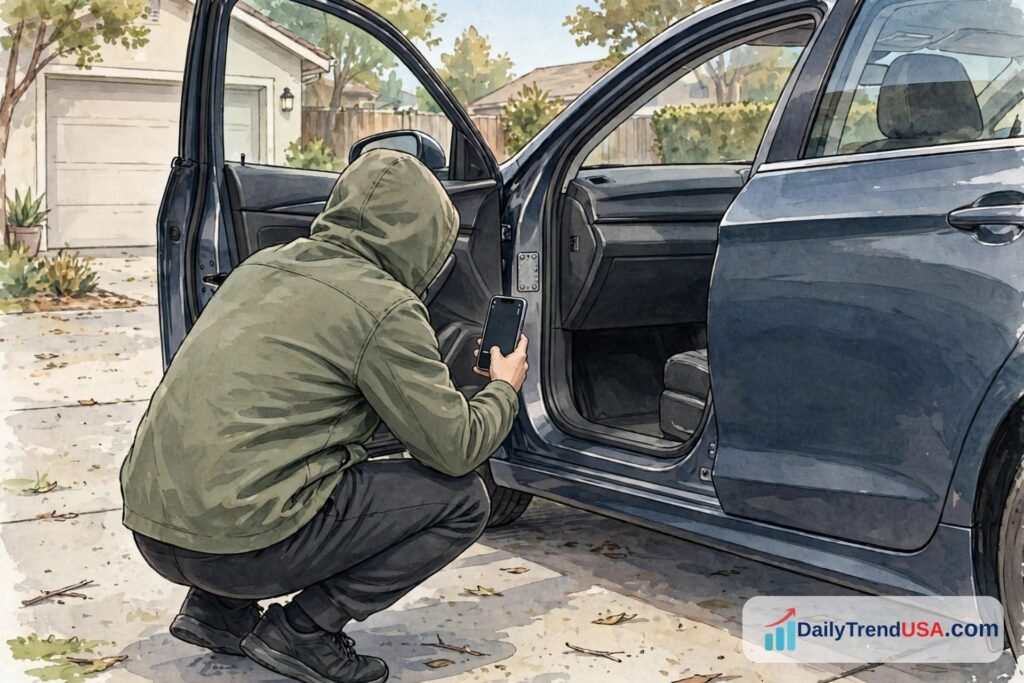
A car recall check takes only a few minutes, and it starts with one number: the 17-character vehicle identification number, or VIN. The National Highway Traffic Safety Administration, known as NHTSA, runs a free lookup tool at nhtsa.gov/recalls that shows whether a specific vehicle has an open safety recall. An open recall means the repair has not been done yet. Safety recall repairs are free of charge on cars up to 15 years old, under federal law.
Where to find your VIN
Key fact: every vehicle has a unique 17-character VIN. The number is a mix of letters and numbers, and it identifies one exact vehicle rather than a model in general. A recall often covers only some vehicles within a model year, so two cars that look the same can have different recall status.
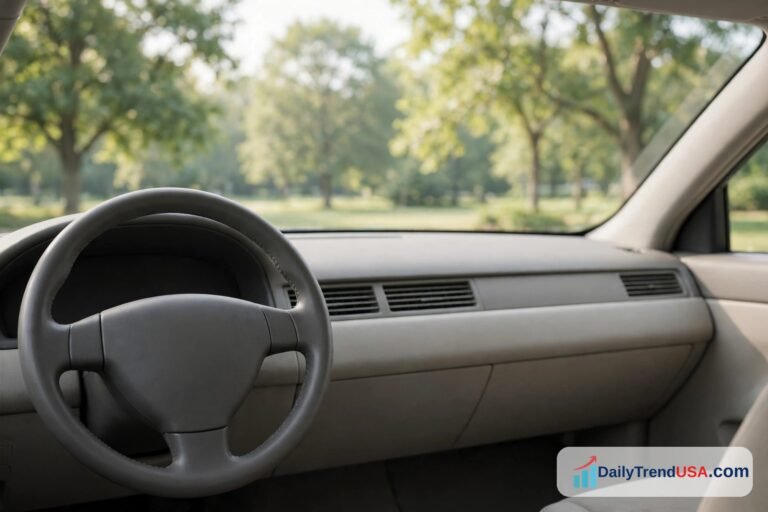
NHTSA says to look on the lower left of the windshield for the 17-character VIN. It is also printed on the driver side door jamb, and it appears on the vehicle registration card and often on the insurance card. Copy it carefully and check it twice. A single wrong letter or number can return results for a different vehicle or no results at all.
How to run the free NHTSA VIN check
Key step: go to nhtsa.gov/recalls and enter the full 17-character VIN. The lookup tool is free to use, and no account, login, or payment is needed. The result relates to the exact vehicle tied to that VIN, not to the model line as a whole.
The same page also accepts a license plate search, but the VIN search is more precise, since a plate moved from an old car to a new one can return the old vehicle. The tool can search up to 100 VINs at once. Repeat the check after a recall is announced in the news, because NHTSA says VINs are added continuously as manufacturers identify the affected vehicles.
What the results mean
Key result: the search shows whether the vehicle has an unrepaired recall. If a recall is open, the result names it. If the vehicle has no unrepaired recalls, the page shows the message: “0 unrepaired recalls associated with this VIN.”
A clean result is good news, but it is not permanent. New recalls are announced through the year, so check again twice a year or after a major recall announcement. Winter is a sensible time to check, along with other cold weather preparation, as the guide to winterize your car before the first freeze explains.
The VIN search does not show everything. It will not show a recall that has already been repaired, some recently announced recalls whose VINs are still being added, recalls more than 15 years old, recalls from small manufacturers, recalls involving an international vehicle, or customer service campaigns. When the search shows nothing but a recall notice has arrived by mail, call the dealer with the VIN and ask for a direct answer.
Safety recall or service bulletin: what is the difference
Key distinction: a safety recall covers a defect that poses a risk to motor vehicle safety, while a service bulletin is guidance for repair shops. NHTSA says recalls cover defects that pose a risk to motor vehicle safety and that may exist in a group of vehicles of the same design or manufacture. A steering fault or a brake defect can lead to a safety recall. Peeling paint or a faulty air conditioning system would not.
A Technical Service Bulletin, often shortened to TSB, advises repair shops how to correct a common problem, and it is not a safety recall. A car can have several bulletins and no open recall. Ask the dealer to state in plain terms whether the work is a safety recall, a bulletin, or a customer service campaign, and whether there is a charge.
What to do if a recall is found
Key step: contact a dealer for the same brand and schedule the repair. The dealer does not have to be the one that sold the car. Have the VIN ready when calling, and keep the recall notice close if one arrived by mail.
Key fact: safety recall repairs are free of charge on cars up to 15 years old, counted from the time the car was sold to the first owner. For older cars, automakers and dealers will often still provide the repair free, so it is worth asking. If a dealer refuses a recall repair or tries to charge for it on a car within the age limit, contact the manufacturer directly.
The recall notice itself will say whether the car is safe to drive before the repair. Most recalls allow normal driving until the appointment, but some tell owners to park outside and away from structures because of a fire risk. In rare cases, a recall carries a “do not drive” warning. If the notice says not to drive the car, follow that instruction and ask the dealer or manufacturer what to do next.
Some recalls are fixed through an over the air software update, much like a phone update. Others need a physical repair, and it can take weeks after an announcement for dealers to be informed and equipped.
How to check a used car before you buy it
Key step: run the VIN at nhtsa.gov/recalls before signing anything. Federal law bans the sale of new cars with open recalls, but no similar law exists for used cars, so a used car can legally be sold with an open recall. The buyer is the one who has to check.
Many online listings for used cars include the VIN. If the listing does not show it, ask the seller for it, or read it from the car in person. If the seller will not share the VIN, treat that as a warning sign. If the check shows an open recall, ask the seller to fix it before delivery. A used car dealer can have the work done free of charge, while a private seller may leave the repair to the buyer.
A recall check is one part of a used car inspection, not the whole of it. Have a trusted mechanic inspect the car before purchase, since an owner who skipped recall work may have skipped other maintenance too.
Other ways to stay informed
Key step: check the manufacturer recall page as well as the NHTSA site. Most automakers run their own VIN lookup tool, which can sometimes show a recall before it appears in the federal database. Checking both takes only a few extra minutes and closes that gap.
NHTSA also offers the SaferCar app, a free app for phones that can scan a VIN barcode and check for recalls. NHTSA offers email alerts tied to a vehicle, and Consumer Reports offers its own recall tracker service. Car companies must also send official recall notices by first class mail.
Recalls are not limited to cars. A recent example is the recall of 5.9 million Bodum French press coffee makers after 70 reports of carafes breaking, including 48 reports of burns, as covered in the report on the Bodum French press recall and burn risk.
Why recalls happen and why some owners never hear about them
Key fact: a recall starts when a safety defect is found, either by the automaker or through a NHTSA investigation. Automakers often uncover problems through warranty claims, dealer reports, or driver complaints. When a safety defect is confirmed, the manufacturer must report it and recall the affected vehicles. NHTSA supervises safety recalls and can fine automakers that fail to disclose defects or fix them fast enough.
Tens of millions of cars are recalled each year, according to Consumer Reports. A recall is not proof that a particular car is badly built. It is evidence that a problem was found and that a fix is being offered.
Many owners never hear about a recall because the notice never reaches them. Mailed notices often go out days or even weeks after a recall is first announced online. Sometimes they do not reach second or third owners, and automakers may be unable to contact owners who have moved. That gap is why a personal check matters more than waiting for a letter.
What we know: the VIN is a unique 17-character number found on the lower left windshield, the driver side door jamb, the registration card, and often the insurance card. The free NHTSA lookup at nhtsa.gov/recalls shows whether that exact vehicle has an unrepaired safety recall, and a clean result reads “0 unrepaired recalls associated with this VIN.” Safety recall repairs are free of charge on cars up to 15 years old. Used cars can legally be sold with an open recall, so the VIN check belongs before any purchase. Mail notices can miss second owners and owners who moved, which is why the check itself, repeated through the year, is the reliable step.
Sources
- National Highway Traffic Safety Administration, “Check for Recalls: Vehicle, Car Seat, Tire, Equipment,” https://www.nhtsa.gov/recalls
- Consumer Reports, “Car Recall Guide: Steps to Handle a Safety Notice,” https://www.consumerreports.org/cars/car-recalls-defects/car-recall-guide-your-questions-answered-a1115780728/
- Daily Trend USA, “Winterize Your Car Before the First Freeze Hits,” https://dailytrendusa.com/winterize-car-before-first-freeze/
- Daily Trend USA, “Bodum Recalls 5.9 Million French Presses Over Burn Risk,” https://dailytrendusa.com/bodum-french-press-recall-burn-risk/



One Comment