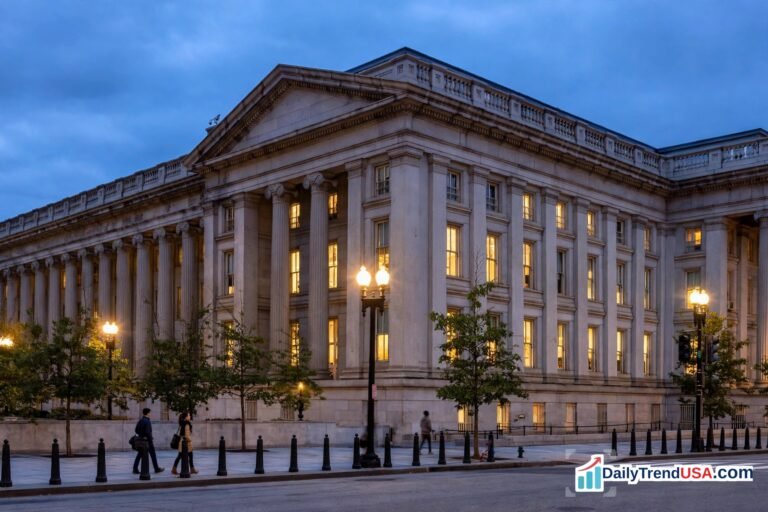
More than 4,000 registered nurses at Brigham and Women's Hospital in Boston reached a tentative contract agreement on November 11, hours before an open-ended strike was set to begin at 7 a.m. on November 12. The Massachusetts Nurses Association said the deal protects patient care, preserves affordable health insurance and improves pay, and its bargaining committee will recommend that members vote to approve it.
What we know
- More than 4,000 Brigham and Women's Hospital nurses, represented by the Massachusetts Nurses Association, reached a tentative deal with Mass General Brigham on Wednesday, November 11, 2026.
- The deal averted an open-ended strike set for 7 a.m. on Thursday, November 12, which the union called the largest in Massachusetts history.
- The contract would run from ratification through September 30, 2028.
- Two new top pay steps, 2.5% above the current top from November 15, 2026 and 2.5% higher again from September 30, 2027, plus a $1,000 bonus, pro-rated by hours, for nurses below the top step on ratification.
- The hospital agreed not to replace permanent nurses with temporary nurses, and it will post 20 new 36-hour float pool nurse positions.
- Nurses defeated a proposed Harvard Pilgrim premium split increase. Current 40-hour nurses keep premium-free coverage; newly hired 40-hour nurses contribute 2.5%.
- Mass General Brigham confirmed the deal on November 11 and said the union had called off the strike.
What we don't know
- When nurses will vote. The union has not announced a date.
- Whether members will approve it. Nurses rejected the hospital's "last, best, and final" offer on October 22 and 23, so approval is not automatic.
- What happens if members reject the deal. The strike was called off while members vote, but the dispute could resume.
- How the new staffing rules will work in practice, including how the joint committee will measure progress.
Key facts
| Hospital | Brigham and Women's Hospital, Boston |
| Nurses covered | More than 4,000 registered nurses |
| Union | Massachusetts Nurses Association |
| Employer | Mass General Brigham |
| Agreement reached | Wednesday, November 11, 2026 |
| Strike averted | Open-ended strike set for 7 a.m., Thursday, November 12 |
| Contract length | Ratification through September 30, 2028 |
| New pay steps | 2.5% above step 21 from November 15, 2026; 2.5% above step 22 from September 30, 2027 |
| Bonus | $1,000, pro-rated by hours, for nurses below the top step |
| New float pool posts | 20 new 36-hour float pool nurse positions |
| Insurance | Current 40-hour nurses keep premium-free cover |
| Strike vote | September 24, 2026: 2,986 in favor, 215 against |
What happened
The deal came at the last possible moment. Nurses at Brigham and Women's Hospital, one of Boston's best known teaching hospitals, had been set to walk off the job at 7 a.m. on Thursday, November 12, in an open-ended strike with no set end date.
Instead, late on Wednesday, November 11, the two sides reached a deal. The Massachusetts Nurses Association announced the deal on November 11, and Mass General Brigham confirmed it the same day, saying the union had called off the strike.
The agreement is tentative, so it is not final yet. The union's bargaining committee will recommend that members approve it, and nurses will vote on ratification. Until that vote, the strike stays called off; if members reject the deal, the dispute could start again. The hospital is part of Mass General Brigham, and the nurses are represented by the Massachusetts Nurses Association, the state's largest nurses union, with about 26,000 members.
What the deal includes
The agreement covers the three issues the union said mattered most: safe patient care, affordable health insurance and pay.
On staffing, the hospital agreed in contract language not to replace permanent Brigham nurses with temporary nurses. It will post 20 new 36-hour float pool nurse positions to limit temporary staff use and reduce how often nurses are moved, or floated, between units. The hospital will track floating and temporary nurse use, share the data with a new joint Staffing and Resources Committee, and explain whenever more than 15% of the full-time positions in any unit are covered by temporary nurses.
Charge nurses will get a lighter patient assignment, or none at all, so they can help move patients through the unit and respond to emergencies. The union argued that limiting temporary staffing protects continuity of care, because patients stay with nurses who know their units, and that reducing floating keeps nurses in the areas they know best.
On pay, the deal adds two new steps at the top of the wage scale: the first, 2.5% above the current top step, from November 15, 2026, and the second, another 2.5% above that, from September 30, 2027. Nurses below the top step will receive a $1,000 bonus, pro-rated by hours, when the contract is ratified. The contract runs from ratification through September 30, 2028. The union had sought larger raises of 3% and then 4%, while the hospital said the deal stayed within the limits of its earlier final offer, according to the Boston Globe.
On health insurance, nurses defeated a proposed Harvard Pilgrim premium split increase for all current nurses. Current nurses working 40 hours will keep premium-free coverage, while newly hired 40-hour nurses will contribute 2.5% of the premium. The deal also covers practice management time for advanced practice nurses, stronger cancellation protections, more education funding, fairer vacation access and wider certification reimbursement.
How the dispute got here
The dispute built up over months. In July, nurses held a one-day strike, followed by a four-day lockout. On September 24, nurses voted 2,986 to 215 to authorize an open-ended strike, a margin of about 93%.
On October 2, the union issued notice of a strike beginning October 14, postponed so members could vote on the hospital's offer. On October 22 and 23, nurses rejected what the hospital called its "last, best, and final" offer, and on November 1 the union issued a new 10-day strike notice for November 12.
Bargaining resumed on November 9 with a federal mediator. The 28th session began that Monday morning and ran past midnight without a resolution. As of Tuesday, the union said there was still no agreement, though it reported some progress. Both sides said they were open to more talks, but no further sessions were on the calendar. The hospital's offer included a 2.5% raise in each year of a proposed two-year contract for top-scale nurses, while keeping the existing 5% annual raises for nurses moving up its 20-step scale.
"I am incredibly proud of the Brigham nurses who stood strong to protect the world-class patient care we provide," said Kelly Morgan, a labor and delivery nurse who chairs the union's bargaining committee. "We secured this agreement with the help of countless community members, patients, unions and elected officials who supported us for many months. By standing together, we protected patients and the future of union nursing care at the Brigham."
"Every day, Brigham nurses provide extraordinary care to patients and families facing some of the most challenging moments of their lives," said Jim McCarthy, a nurse in the post-anesthesia care unit and vice chair of the bargaining committee. "Our collective power as union nurses has made it possible to support and advocate for our patients while securing this tentative agreement."
Boston's large institutions often make national news, including a Harvard admissions case that a judge dismissed for now.
What happens next
The next step is the ratification vote. The bargaining committee will recommend approval, but the union has not announced a vote date, and the deal only takes effect once members approve it.
If nurses approve the deal, the new pay steps, the $1,000 bonus and the staffing and insurance terms will take effect on the dates in the agreement. If they reject it, the two sides return to bargaining, and the strike threat returns with it.
For patients, the immediate result is simple: the hospital will operate normally on Thursday. Patients with appointments or planned procedures can keep them as scheduled. For families planning ahead, the same care that goes into health and safety guidance at home applies here too: check the hospital's own updates before a visit.
What it means for patients
The strike would have hit a hospital that handles some of the most complex care in the region, forcing it to rely on replacement staff and reschedule some care.
The agreement tries to fix the root of the dispute rather than just the pay line. Temporary nurses and floating were at the center of the talks because both affect how well a nurse knows her patients. A nurse who works the same unit every day knows the routines, the equipment and the team; a nurse moved elsewhere has to learn them on the spot.
That is also why the deal protects charge nurses' time: without a full patient load, a charge nurse can watch the whole unit and help when something goes wrong. Patients heading into the holiday season can also review safe food handling over the holidays while the hospital returns to normal operations.
The deal is not the end of the story: the vote has not happened, and the new staffing rules have not been tested. But both sides have agreed on a path forward, and the strike that was hours away is off the table while nurses decide.