Standfirst: The COP31 climate talks in Antalya, Turkey, collapsed on Sunday, November 22, after nearly 200 countries failed to agree on an overarching deal. The talks ran about two days past their scheduled end, making COP31 the longest United Nations climate conference ever held. The breaking point was the same issue that has divided climate talks for years: whether the final agreement should say the world needs to move away from fossil fuels.
Key facts
| Fact | Detail |
|---|---|
| Event | COP31, the United Nations climate change conference |
| Location | Antalya, Turkey |
| Dates | November 9 to November 22, 2026 |
| Outcome | No agreement on the main deal, known as the cover decision or the Antalya Pact |
| Countries involved | 194 Parties to the United Nations climate process |
| Breaking point | Whether the final text should mention moving away from fossil fuels |
| Length | Longest COP ever, running about 44 to 48 hours past its scheduled close |
| Last comparable breakdown | COP15 in Copenhagen in 2009 |
| Progress reported | Decisions on a Just Transition, plus an electrification pledge signed by more than 90 countries |
| Next step | COP32, with a second global stocktake of climate progress |
What we know / What we don’t know
| What we know | What we don’t know |
|---|---|
| COP31 ended on Sunday, November 22, without agreement on a cover decision, after nearly 200 countries could not reach consensus | Whether any part of the failed Antalya Pact will be taken up again before COP32 |
| The final draft deal did not mention coal, oil, or gas, and the European Union and other countries refused to endorse it | When COP32 will be held or where the next round of talks will pick up the fossil fuel question |
| The first draft of the cover decision, published on Monday, called for an “immediate transition away from fossil fuels in energy systems” | How the collapse will affect national climate plans that countries were due to update |
| More than 90 countries signed a pledge to ramp up electrification of their economies | Whether the electrification pledge will lead to binding commitments |
| The talks began on November 9 and were scheduled to end on Friday, November 20 | How the United States will respond to the outcome, or what it means for American energy prices in the short term |
What happened in Antalya
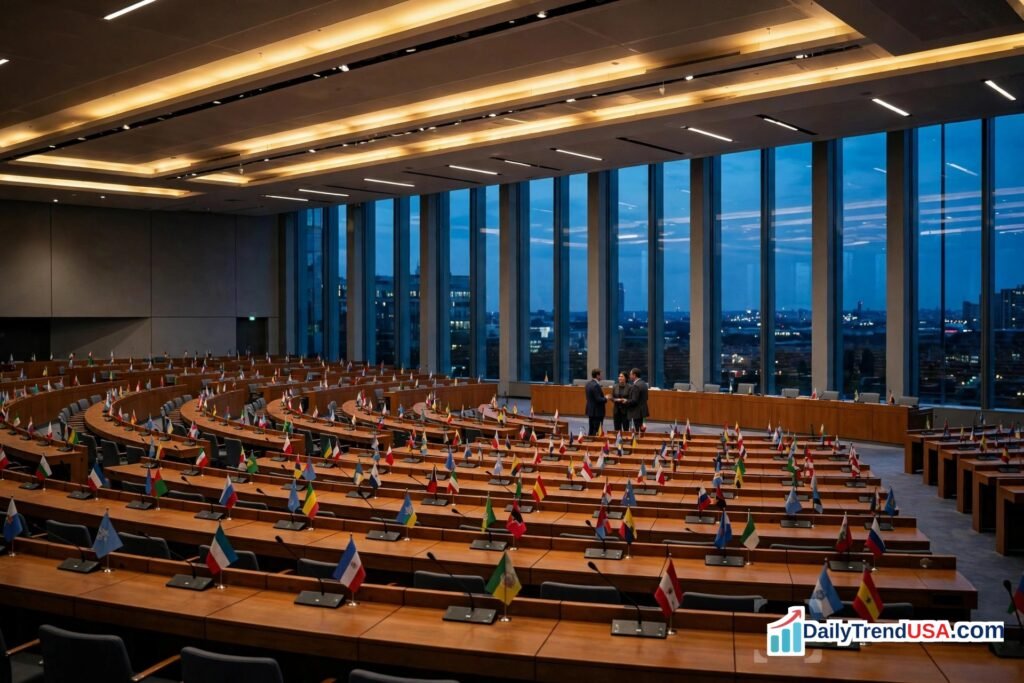
The COP31 climate conference was supposed to end on Friday, November 20. Instead, negotiators stayed in Antalya through the weekend, pushing the talks into overtime as they tried to bridge a gap clear from the start. By Sunday, it was plain that no deal was coming.
At the final meeting meant to approve the Antalya Pact, the draft deal did not have the consensus it needed: a pact of this kind needs the agreement of nearly all of the more than 190 countries at the talks, and the European Union, Panama, the Marshall Islands, and Norway were among those that rejected it.
COP31 President Murat Kurum, Turkey’s environment minister, acknowledged that support was not there to push the pact through. Chris Bowen, the president of negotiations in the unusual joint Turkish-Australian leadership of the talks, called the result very disappointing but said there were “a lot of good things” to come out of the talks.
As the proposed deal fell apart in the plenary session, Kurum was absent from the room, leaving Elchin Allahverdiyev of Azerbaijan to announce the failure. “Unfortunately, we were unable to reach agreement on a cover decision. And that’s disappointing, very disappointing,” Allahverdiyev said, according to the Associated Press.
The collapse makes COP31 the longest United Nations climate conference ever held, and the first major breakdown since COP15 in Copenhagen in 2009, at a moment when scientists say the world is on course to pass a key warming limit.
Why fossil fuels broke the talks
Fossil fuels were the sticking point from the first day. The first draft of the COP31 cover decision, published on Monday, called for an “immediate transition away from fossil fuels in energy systems.” That language reflected the deal reached at COP28 in Dubai in 2023, when countries agreed for the first time to “transition away from fossil fuels.”
But every later draft stripped out all mentions of fossil fuels. More than 100 countries pushed to keep the language in, according to CNN. The final text introduced only an oblique reference to the 2023 Dubai deal, without naming coal, oil, or gas at all.
For the European Union and the countries that stood with it, that was not enough. The European climate chief, Wopke Hoekstra, said the EU could not accept an agreement that did not mention fossil fuels when the world is heading for an overshoot of 1.5 degrees Celsius, the warming limit countries set for themselves in the 2015 Paris Agreement.
“It is unconscionable that we would have a climate act that makes no reference to fossil fuel, no reference to transitioning away from fossil fuel either,” said Darragh O’Brien, Ireland’s climate minister, speaking on behalf of the EU at the talks.
The talks also ran into trouble over money: wealthy nations and developing countries could not agree on a global target for funding to help poorer nations adapt to climate change, and the wider finance question stayed unresolved even though the draft pact proposed tripling adaptation finance.
The backdrop made compromise harder. Energy prices have climbed sharply during the war between the United States and Iran, and several developing countries were reluctant to back a deal that would limit investment in new oil, gas, and coal supplies. A threatened walkout on Saturday forced Turkey and Australia to convene a hurried meeting between the European Union and Saudi Arabia, but no compromise emerged.
Burning fossil fuels like oil, gas, and coal makes up roughly 73 percent of global greenhouse gas emissions, according to NPR. That is why the wording mattered so much to both sides: for countries pushing for stronger action, a climate agreement that does not name the main cause of warming is not a real agreement, while for oil producers and countries worried about energy costs, language on phasing out fossil fuels threatens their economies.
What the talks did agree on
The collapse of the main deal does not mean COP31 produced nothing. Smaller decisions moved forward during the two weeks, and the meeting continued after the failure on the cover decision to work through them.
Negotiators reached decisions on a Just Transition, the effort to make sure workers and communities are not left behind as economies shift to cleaner energy, and the talks launched the first version of an international registry under Article 6.2, the system that tracks how countries trade carbon credits with each other.
The clearest progress came on electrification. More than 90 countries signed a pledge to ramp up the electrification of their economies, and the COP31 Electrification Delivery Package moved forward. United Nations Climate Change Executive Secretary Simon Stiell said that through individual country pledges and the Leaders’ Summit, COP31 showed that around half the global economy is accelerating electrification.
Stiell was blunt about the failure in his closing remarks at the COP31 closing ceremony in Antalya on November 22. “I share the deep disappointment of many: COP31 has been unable to agree on issues related to both Presidency’s led decisions,” he said. He added that the process must follow the science and meet the challenge, and that climate impacts are worsening around the world while fossil fuel costs drive inflation through every economy.
But Stiell also pointed to what had been achieved. “Across the Action Agenda, COP31 has delivered real progress and concrete results,” he said, and closed with a note of resolve: “The fight continues. We will never give up.”
What it means for the United States
The outcome still matters for American readers: the United States is one of the world’s largest emitters, and the failure to agree on fossil fuel language leaves the direction of global climate policy unclear at a time when American households are already paying more for energy.
The war between the United States and Iran has pushed energy prices higher around the world, and that price pressure was part of what made a deal harder to reach in Antalya. Developing countries argued that they could not accept limits on fossil fuel investment while their energy costs were climbing. That same price pressure is felt in the United States, where gasoline and heating costs shape family budgets every winter. For more on how shifting weather patterns affect American energy demand, see our report on the polar vortex weakening unusually early.
The science behind the talks has also become more urgent. This is the first United Nations climate summit where there has been scientific consensus that the world will pass the 1.5 degree warming threshold. The United Nations found that a best-case outcome of 1.7 or 1.8 degrees would require cutting emissions immediately, reducing them by 45 percent by 2035. Scientists say that would require deep cuts in fossil fuel use. For context on how warming oceans and weather patterns are already changing American seasons, see our coverage of El Nino strengthening and record odds this fall.
The collapse also leaves open questions about the next round of national climate plans, and the second global stocktake, the formal review of how far countries have come toward their climate goals, is now due to be a key test at COP32, which Stiell called “a vital stepping stone.”
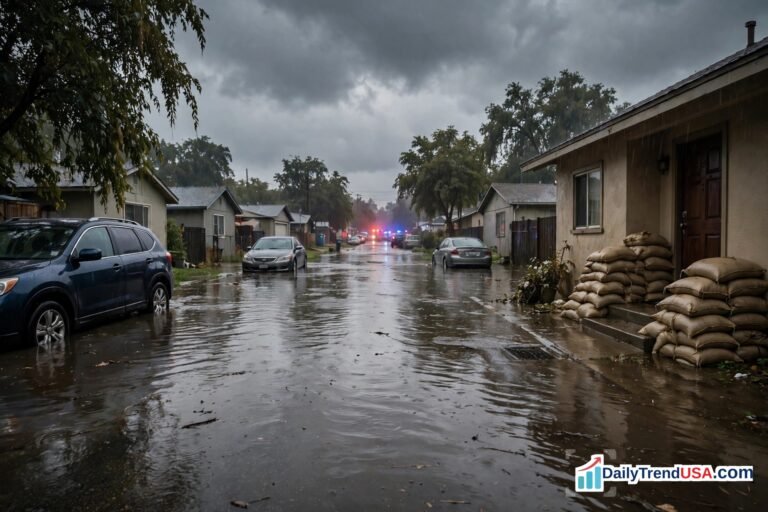
For American communities already dealing with extreme weather, the stakes are practical rather than abstract. Powerful storms have hit the West Coast this season, and the cost of preparing for floods and fires keeps rising. Our guide to powerful storms and the atmospheric river hitting the West Coast explains what residents are facing and how to prepare.
What happens next
The climate process now moves toward COP32, where negotiators will have to decide whether to try again on the fossil fuel question or find another way forward. Stiell said there are lessons to learn from Antalya, and that the process needs to improve, modernize, and reform, with consensus built from the ground up.
The history of the talks suggests a comeback is possible. The process recovered after the Copenhagen breakdown in 2009, which was followed six years later by the Paris Agreement. “This process has suffered setbacks before and come back stronger. It must do so again,” Stiell said. For now, the summit has ended without its main agreement, and the next round of talks will inherit the same argument that broke this one.
Sources
United Nations Framework Convention on Climate Change (UNFCCC): Simon Stiell remarks at the Closing Plenary of COP31, Antalya, November 22, 2026; CNN: “Global climate summit collapses as countries fail to agree on moving away from fossil fuels,” November 22, 2026; The New York Times: “COP31 Talks Collapse in Turkey in a Clash Over Fossil Fuels,” November 22, 2026; Politico: “Global climate talks have collapsed. Here’s what just happened,” November 22, 2026; The Wall Street Journal: “U.N. Climate Talks Collapse Over Fossil Fuel Rift,” November 22, 2026; NPR: “International climate talks end in disappointment,” November 22, 2026; Associated Press, via TMJ4: “UN climate talks break down over bitter disagreements on fossil fuels,” November 22, 2026.