

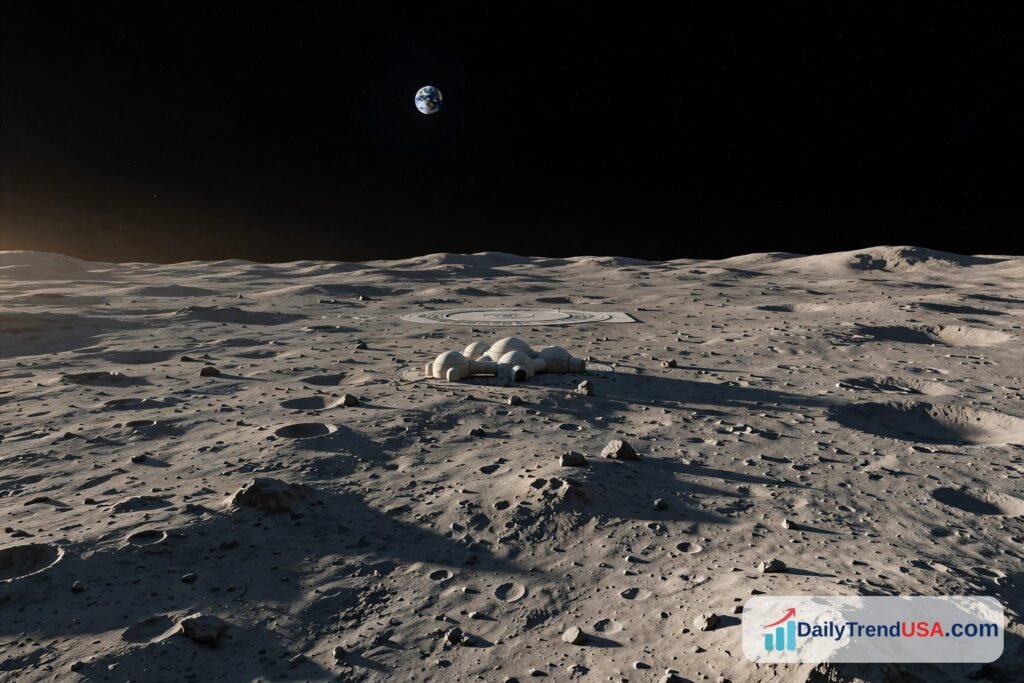
Standfirst: NASA has opened applications for its next class of astronauts, and the deadline is Dec. 3, 2026. The new class will train for work on the Moon and help prepare for the first crewed missions to Mars, according to NASA’s announcement on Nov. 7, 2026.
Key facts at a glance
| Announcement date: | Nov. 7, 2026 |
| Application deadline: | 11:59 p.m. EST, Thursday, Dec. 3, 2026 |
| Where to apply: | NASA’s application link at go.nasa.gov/3WyvlQi; details at go.nasa.gov/astro2026 |
| Final selection: | Expected late 2027 |
| Training start: | After selection, with candidates reporting in early 2028, according to the Associated Press |
| Last round: | Opened 2024; more than 8,000 applications; 10 candidates selected in 2025 |
| Active astronauts: | 32 |
| People selected since the 1960s: | 370 |
What we know and what we don’t know
What we know:
- NASA opened applications for its next astronaut class on Nov. 7, 2026, in a news release titled “NASA Seeks Next Generation of Explorers to Join Astronaut Corps.”
- U.S. citizens have until 11:59 p.m. EST on Thursday, Dec. 3, 2026, to submit completed application materials.
- Applicants need U.S. citizenship and a master’s degree in a STEM field, or an accepted alternative, plus at least three years of related professional experience.
- NASA expects to make its final selection in late 2027, with training to begin after that.
- The last application round opened in 2024 and drew more than 8,000 applications. Ten candidates were selected in 2025.
What we don’t know:
- NASA has not published the size of the new class, so no one can say how many people will be selected.
- NASA has not said which missions the new candidates will fly, and no report promises any selected applicant a trip to the Moon.
- How many applications NASA will receive in this round.
- Whether the Artemis schedule for a lunar landing in 2028 will hold.
The deadline and how to apply
NASA announced the opening on Saturday, Nov. 7, during an air show at the Kennedy Space Center in Florida, according to the Associated Press, and applications close less than four weeks later.
U.S. citizens who want to apply must submit their completed materials by 11:59 p.m. EST on Thursday, Dec. 3, 2026. NASA points applicants to its application link at go.nasa.gov/3WyvlQi, and its recruitment page at go.nasa.gov/astro2026 carries the full details and a link to the official USAJOBS announcement.
“This is an extraordinary time to join NASA’s astronaut corps,” said NASA Administrator Jared Isaacman in the announcement. “The people we select could walk on the Moon, live and work at the Moon Base, and help pioneer the systems and operations that will ultimately carry crews to Mars.”
NASA Deputy Administrator Matt Anderson put it more simply: “The window is open. The mission is waiting. And the only thing missing from the greatest adventure humanity has ever embarked upon is you.”
Who can apply
Applicants must be U.S. citizens. They must hold a master’s degree in a STEM field, including engineering, biological science, physical science, or computer science, from an accredited institution.
There are three accepted alternatives to the master’s degree. The first is completion of at least two years of work toward a doctoral program in an appropriate technical field, including engineering, biological science, physical science, computer science, or mathematics. The second is completion of a Doctor of Medicine, Doctor of Osteopathic Medicine, Physician Assistant, Doctor of Nursing Practice, Family Nurse Practitioner, or a related medical degree. The third is completion of, or current enrollment in, a nationally recognized Test Pilot School program, provided the program is completed by July 2027. If Test Pilot School is the only advanced technical degree, the applicant must also hold a bachelor’s degree in a STEM field.
On top of the degree, candidates must have at least three years of related professional experience after completing their qualifying degree. Pilots can meet the experience rule through flight time instead. For high-performance jet aircraft, NASA requires 750 hours of pilot-in-command time. For other fixed-wing aircraft, it requires 1,500 total flight hours, including 750 hours as pilot in command. For rotary-wing aircraft, it requires 1,000 total flight hours, including 300 hours as pilot in command. For medical doctors, residency training may count toward the experience requirement and must be completed by July 2027.
Every candidate must also pass NASA’s long-duration astronaut flight physical and show strong leadership, teamwork, and communication skills. Meeting the minimum requirements does not guarantee selection. NASA’s Astronaut Selection Board reviews the applications and invites highly qualified applicants to the Johnson Space Center in Houston for further evaluation. NPR reported that the job comes with a starting salary of $164,395 a year.
What the new astronauts will do
The new class is being hired for the Moon first. NASA says the selected candidates will train to operate on the lunar surface and live and work beyond Earth, including spacewalking, lunar geology, and flying high-performance aircraft.
The work connects directly to the Artemis program, NASA’s plan to return astronauts to the Moon and build a lasting presence there. NASA says its Artemis missions will send astronauts on increasingly difficult missions near the lunar South Pole, and the agency plans to establish an enduring human presence on the lunar surface as a foundation for the first crewed mission to Mars.
The Associated Press reported that NASA intends to return astronauts to the lunar surface in 2028, the first time humans would walk there since 1972. The same report noted that this will be NASA’s 25th astronaut class since the original Mercury Seven in 1959. For decades, the main destination for new astronauts was the International Space Station. This class is being shaped around the Moon instead, and NASA’s release does not mention the space station at all.
NASA’s Artemis II mission sent four astronauts on a flight around the Moon earlier this year, the first crewed lunar flyby in more than 50 years. Our report found that its launch left temporary disturbances in the ionosphere, the upper layer of Earth’s atmosphere, stretching about 3,100 miles across North America. Read our report on the Artemis II ionosphere findings.
“For those who apply, becoming a NASA astronaut is more than a career opportunity,” said Scott Tingle, chief astronaut and chair of the Astronaut Selection Board at NASA’s Johnson Space Center in Houston. “It is a chance to join a legacy of explorers who have pushed the boundaries of discovery and play a role in the missions that will shape humanity’s future in space.”
How hard it is to get in
The last time NASA opened applications, in 2024, it received more than 8,000 applications. Ten candidates were selected in 2025 and are now completing nearly two years of training. That is roughly one selection for every 800 applicants.
Since the 1960s, NASA has selected 370 people to train as astronaut candidates. The agency now has 32 active astronauts. The new class will add to that small group. NASA selects in groups of various sizes based on need, and the size of this class has not been announced, so no one can calculate the odds yet.
The Swift telescope, which watched the high-energy sky for two decades, burned up over Indonesia earlier this year after its orbit decayed. Read our report on the Swift telescope’s final days.
What happens after you apply
NASA’s selection process runs for more than a year. After the Dec. 3 deadline, the Astronaut Selection Board reviews applications. Highly qualified applicants may be asked to come to the Johnson Space Center in Houston for interviews and further evaluation.
NASA expects to make its final selection in late 2027. The Associated Press reported that the chosen candidates will begin training by early 2028. That is the same year NASA intends to return astronauts to the lunar surface. The 2024 round took about a year from the close of applications to the announcement of the 10 candidates in September 2025, and those candidates are still in training now. Anyone who applies in this round should expect a similar wait.
While the selection runs, space science moves on. The Webb telescope recently studied interstellar comet 3I/ATLAS, finding dusty ice in a visitor from another star system. Read our report on Webb’s 3I/ATLAS discovery.
What to watch next
Three things will show how this round is going. The first is the Dec. 3 deadline itself, and whether NASA says anything about how many applications it received. The agency published the 8,000 figure for the last round. The second is the size of the class NASA announces in late 2027. The third is the Artemis schedule: the new astronauts are being hired for a Moon program that aims to land crews near the lunar South Pole in 2028, and if that schedule holds, the new class could train for missions that fly within a few years of their selection.
For now, the window is open, and it closes on Dec. 3. Anyone who meets the requirements and wants the job has less than four weeks to apply.
Sources
- NASA, “NASA Seeks Next Generation of Explorers to Join Astronaut Corps,” release RELEASE26-093, Nov. 7, 2026
- NASA, “Become an Astronaut” recruitment page
- Associated Press, via The Weather Channel, “NASA opens applications for next Artemis astronaut class,” Nov. 9, 2026
- NPR, via World Right Now, “NASA is looking for astronauts to live and work on the Moon,” Nov. 8, 2026
- Gizmodo, “NASA Opens Applications for Moon Base Astronauts,” Nov. 8, 2026
Note on sourcing: the deadline, requirements, and figures in this article come from NASA’s Nov. 7, 2026 release, read directly. The salary figure is attributed to NPR, and the 25th class and 2028 lunar return are attributed to the Associated Press. Class size and mission assignments have not been announced.




One Comment