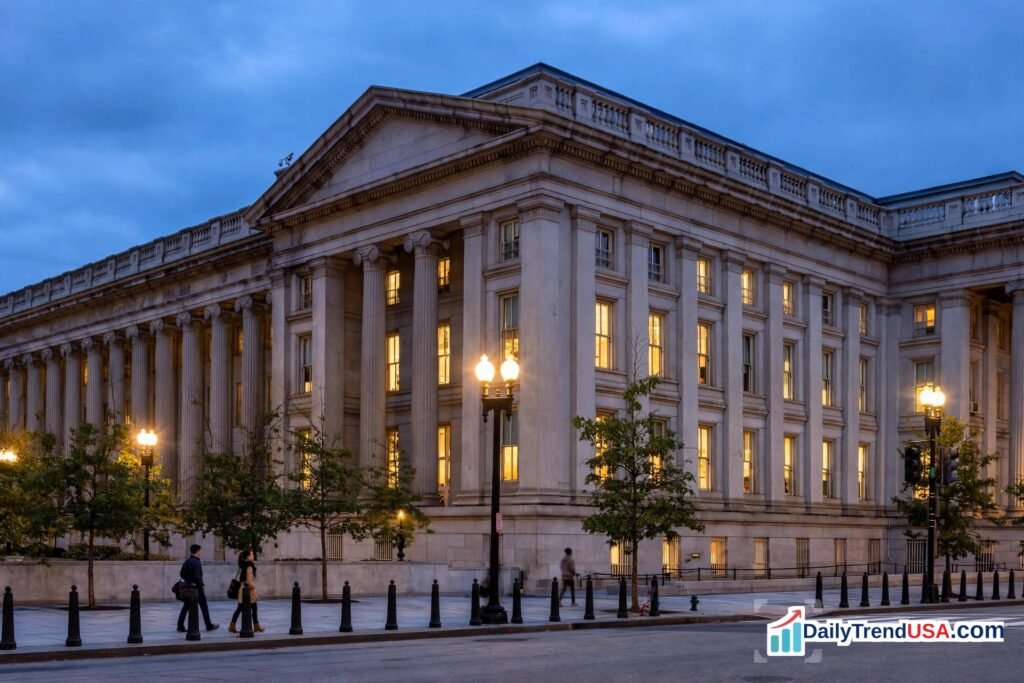
Standfirst: The Financial Crimes Enforcement Network said on Tuesday, November 24, 2026, that it is investigating a cybersecurity incident after unauthorized access to a limited subset of its systems. The Treasury bureau has taken some systems offline as a precaution and moved some filing deadlines to December 30, 2026.
Key facts
- Agency: Financial Crimes Enforcement Network (FinCEN), a bureau of the U.S. Department of the Treasury
- Disclosed: Tuesday, November 24, 2026
- What happened: Unauthorized access to a limited subset of FinCEN systems; the bureau calls it a cybersecurity incident
- Systems offline: Some systems taken offline as a proactive measure; the BSA E-Filing website remains operational
- Filing relief: Order FIN-2026-R002 moves covered filings due November 18–December 29, 2026 to December 30, 2026
- Hotline: Financial Institutions Hotline 1-866-556-3974, not affected
- Scope and source: Not disclosed; FinCEN has not said whether any data was taken
What we know
- FinCEN is investigating a cybersecurity incident.
- Unauthorized access reached a limited subset of its systems.
- Some systems are offline.
- The BSA E-Filing website still works.
- Covered filing deadlines move to December 30, 2026.
- The Financial Institutions Hotline still works.
What we don’t know
- Which systems were accessed.
- Who was behind the incident.
- When the intrusion happened or was found.
- Whether any data was viewed, taken, or exposed.
- When full service returns.
- Whether the incident is linked to the reported CIA and ODNI breach.
What FinCEN said
FinCEN posted a service alert on its BSA E-Filing System site on Tuesday, November 24, 2026. The alert says FinCEN is investigating a cybersecurity incident that resulted in unauthorized access to a limited subset of its systems. As a proactive measure, FinCEN has taken some systems offline. The BSA E-Filing website remains operational, but some services may be temporarily unavailable.
The alert also says FinCEN is extending deadlines for filers affected by the disruption, and that the bureau is working to return all systems to normal operations as soon as possible. If a financial institution needs to send suspicious activity information to law enforcement quickly, it can use the Financial Institutions Hotline at 1-866-556-3974. FinCEN says the hotline was not affected by the service disruption.
The Verge reported the disclosure on Tuesday evening. In its report, The Verge quoted the same alert and noted that FinCEN has not offered any information about the full scope or source of the incident. That is the key point for readers right now. The bureau has confirmed that unauthorized access happened, and it has confirmed that some systems are offline. It has not said which systems were reached, how the access happened, or whether any information was taken.
That silence is normal in the first hours of an incident like this. Agencies usually confirm the basic facts first, then release more detail after their security teams have checked what was touched. Until FinCEN says more, any claim about what was taken, or who did it, is guesswork. This article will be updated when FinCEN releases new information.
Which filings move to December 30
On the same day it posted the alert, FinCEN issued Order FIN-2026-R002. The order grants temporary, limited exceptive relief for certain Bank Secrecy Act and Corporate Transparency Act submissions. It was issued on November 24, 2026, and FinCEN says it may modify or extend the order at its discretion.
The order covers filings that would otherwise be due between November 18, 2026 and December 29, 2026. Those filings must now be submitted no later than December 30, 2026. The order covers three groups of filers.
First, financial institutions that used Secure Data Transfer Mode, known as SDTM, to submit reports under the Bank Secrecy Act as of November 18, 2026. Those institutions are relieved of the requirement to file BSA reports during the period from November 18 through December 29, 2026. They must instead submit the reports that would have been filed during that period by no later than December 30, 2026.
Second, reporting companies that are required to file Beneficial Ownership Information reports. Third, individuals who are required to update a FinCEN Identifier, known as a FinCEN ID. Both of those groups get the same treatment. Reports or updates that would otherwise fall due from November 18 through December 29, 2026 must instead be filed by December 30, 2026.
The relief is limited. It does not cover every filer, and it does not suspend other duties. Financial institutions must still meet all other anti-money laundering and countering the financing of terrorism requirements under the Bank Secrecy Act. That includes the duty to keep watching for suspicious transactions. The order says so directly. A bank that cannot file on time because of the disruption still has to keep monitoring its accounts and still has to report suspicious activity. The hotline at 1-866-556-3974 stays open for urgent reports to law enforcement.
The start date of the relief window is worth noting. The order reaches back to November 18, 2026, six days before the alert went public. FinCEN has not said when the incident began or when it was found. The order itself does not answer that question. It only sets the window for which filings get more time.
What the order does not mention
One detail stands out. Order FIN-2026-R002 does not mention a cybersecurity incident, unauthorized access, or a breach. It refers only to a service disruption that is hindering filers’ ability to meet their reporting duties. The alert on the BSA E-Filing site is the document that uses the words cybersecurity incident and unauthorized access. The order is written in the dry language of a filing extension.
That split is not unusual. The order is a legal document that changes deadlines. It does not need to describe the cause of the disruption to do its job. The alert is the notice to filers, and it is the place where FinCEN describes what happened in plain terms. Readers should not treat the order’s silence about the cause as a sign that nothing happened. The alert is clear that unauthorized access took place. Readers should also not read more into the order than it says. It is a deadline extension, not a report on the incident.
What FinCEN does, and why this matters
FinCEN is a bureau of the U.S. Department of the Treasury. Its job is to protect the financial system from illicit activity. It collects, analyzes, and shares financial intelligence, and it works to counter money laundering and the financing of terrorism. Banks and other financial institutions file suspicious activity reports with FinCEN under the Bank Secrecy Act. FinCEN holds that data and makes it available to law enforcement.
That role is why an incident at FinCEN draws attention even when the known facts are thin. The bureau sits on sensitive financial intelligence. It holds reports that banks file about transactions they find suspicious. A breach of those records would be serious. But no such breach has been confirmed. FinCEN has said only that a limited subset of its systems saw unauthorized access. It has not said which systems, and it has not said whether any data was taken or exposed. Until it does, the right way to describe the event is the way FinCEN described it: a cybersecurity incident under investigation, with a limited set of systems affected.
The filing extension is the most concrete effect so far. Banks that file through SDTM, companies that file beneficial ownership reports, and people who update a FinCEN ID now have until December 30, 2026 for submissions that were due between November 18 and December 29. That is a practical change with a clear date. It is also a sign of how much the disruption affects day-to-day filing. FinCEN does not move deadlines lightly. The fact that it moved them, and reached the relief back to November 18, shows the disruption has been affecting filers for days, not hours.
For most Americans, the incident will have no direct effect. People do not file reports with FinCEN. Banks do. Companies that file beneficial ownership reports do. The people most affected are compliance teams at banks and the companies that file ownership reports. They now have a new deadline and a hotline number for urgent cases. The rest of the public interest is in what FinCEN finds next: how the access happened, what was touched, and whether anything left the building.
A second breach reported the same day
The FinCEN disclosure came hours after a separate report about a breach at two intelligence agencies. The New York Times reported that the Central Intelligence Agency and the Office of the Director of National Intelligence had discovered a breach of an open source intelligence system, exposing unclassified information. The Department of Defense, whose National Geospatial-Intelligence Agency was also reportedly affected by the breach, declined to comment. The CIA and ODNI did not immediately respond to requests for comment.
It is unclear if the FinCEN incident is related to that breach. The Verge said so directly in its report. The two events happened on the same day, and both involve unauthorized access to U.S. government systems. That timing invites questions. But timing alone proves nothing. FinCEN has not linked its incident to the CIA and ODNI breach, and no other source has either. Until an agency or a credible report connects them, they should be treated as two separate events that happened on the same day.
The same caution applies to the wider picture. This has been a heavy period for cybersecurity news. CrowdStrike, one of the largest cybersecurity companies in the country, agreed to buy Zscaler in a $43.9 billion deal, a sign of how much money and attention now flows into the sector. Earlier this year, malware spread through the Optimizely platform and hit 178 sites, a reminder that widely used software can carry risk to many users at once. And California sued OpenAI over rogue AI hacking, a case that shows how fast the legal fights around new technology are moving. None of those stories is the FinCEN story. They are part of the same landscape, and they show why a bureau like FinCEN, which holds sensitive financial data, draws close attention when it reports an incident.
What banks and filers should do now
For financial institutions that file BSA reports through SDTM, the immediate step is to check the new deadline. Reports that would have been due between November 18 and December 29, 2026 are now due by December 30, 2026. That is the date in Order FIN-2026-R002. FinCEN says it may modify or extend the order, so filers should watch for updates rather than assume the date will move again.
Reporting companies that file Beneficial Ownership Information reports, and individuals who need to update a FinCEN ID, should check the same window. If a report or update falls due between November 18 and December 29, 2026, it is now due by December 30, 2026. The relief is temporary and limited to the groups and dates the order names. Filers outside those groups should not assume they are covered.
All filers should keep meeting their other duties. The order leaves anti-money laundering and countering the financing of terrorism requirements in place. Banks must keep monitoring for suspicious transactions. If a bank needs to send suspicious activity information to law enforcement quickly, FinCEN says to use the Financial Institutions Hotline at 1-866-556-3974. The bureau says the hotline was not affected by the disruption.
Filers should also check the BSA E-Filing site directly for updates. FinCEN says the site remains operational, though some services may be temporarily unavailable. If a service a filer needs is down, the alert is the place to look for the latest status. This article will be updated as FinCEN releases more information.
What happens next
Three things will decide how big this story becomes. First, whether FinCEN says any data was taken or exposed. So far it has not. A statement that data was taken would change the story. A statement that no data was taken would calm it. Either way, that answer is the one to watch for.
Second, whether FinCEN names the systems that were accessed or the method used. The bureau has said only that a limited subset of systems was involved. Naming the systems would tell banks and the public what was at risk. It would also tell security teams elsewhere what to check in their own systems.
Third, whether the incident is linked to the reported CIA and ODNI breach or to any other incident. Right now, no link has been confirmed. If investigators find one, the story becomes part of a larger pattern. If they do not, it stands alone as a single bureau’s incident.
FinCEN says it is working to return all systems to normal operations as soon as possible. Until then, the facts are the ones in the alert and the order: unauthorized access to a limited set of systems, some systems offline, the filing site still running, deadlines moved to December 30, 2026, and the hotline still open. Everything else is still unknown, and this article will be updated when that changes.
Sources
- FinCEN BSA E-Filing System service alert, November 24, 2026, read directly: bsaefiling.fincen.gov
- FinCEN Order FIN-2026-R002, issued November 24, 2026, read directly: FinCEN news release and order PDF
- The Verge, “US financial crimes bureau discloses ‘cybersecurity incident,'” by Lauren Feiner, November 25, 2026, read directly: theverge.com